Tuesday, March 27, 2012

The History of the English Language in Ten Minutes

Russell discovered this YouTube video, a compilation of Open University's History of the English Language in 10 Minutes series, and shared it with me. It's a quick, humorous, and informative overview of the development of the English language, which is very much in keeping with this blog's featured-word theme. The video (series) also happens to be a great little piece of publicity for Open University, a UK-based online university (n.b. one of my internet friends is an OU student and she seems pleased with it).

Open University's History of the English Language in 10 Minutes is divided into ten parts: Anglo-Saxon, The Norman Conquest, Shakespeare, The King James Bible, The English of Science, English and Empire (my favorite), The Age of the Dictionary (strangely enough there's no specific mention of the OED), American English, Internet English, and Global English. You can watch them in one fell swoop1 by following the link in the first line of this post, or one by one through the original site, linked elsewhere.

Highly recommended.
  1. See MacBeth. Another phrase that could have been included in the Shakespeare episode.

Sunday, March 25, 2012

one of those relatives

Yes, I'm one of those relatives. The ones who give books rather than toys to the children in their lives. Though not having kids myself I sometimes unintentionally give them books beyond their reading levels. Poor Olivia got one of my favorite books, Zahrah the Windseeker, for her 10th birthday and while it is listed as 10 and up some places, I realized it wasn't the best choice when I visited her and found her reading The Tale of Despereaux. In any case, I'm making a concerted effort to be better about that.

This year, in hopes of being prepared for the birthdays that always seem to sneak up on me, I bought books for all my reading nieces and nephews in one fowl swoop (we already had something for the littlest one, who happens to have one of the earliest birthdays). Since I'm certain that none of them read this blog I'm going to share my selections here.

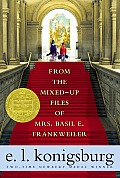
From the Mixed-up Files of Mrs. Basil E. Frankweiler by E.L. Konigsburg (for boy turning 11)

Claudia knew that she could never pull off the old-fashioned kind of running away...so she decided not to run FROM somewhere, but TO somewhere. And so, after some careful planning, she and her younger brother, Jamie, escaped — right into a mystery that made headlines!
From the Mixed-up Files of Mrs. Basil E. Frankweiler was one of my favorite books. I loved the idea of running away to the the Metropolitan museum of art (and of sleeping in a famous, ornate bed).

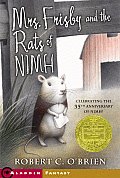
Mrs. Frisby and the Rats of NIMH by Robert C. O'Brien (for girl turning 10)

Mrs. Frisby, a widowed mouse with four small children, is faced with a terrible problem. She must move her family to their summer quarters immediately, or face almost certain death. But her youngest son, Timothy, lies ill with pneumonia and must not be moved. Fortunately, she encounters the rats of NIMH, an extraordinary breed of highly intelligent creatures, who come up with a brilliant solution to her dilemma.
Another book I loved as a child (I loved the film adaptation, The Secret of NIMH as well; I remember reading Rasco and the Rats of NIMH, but not the second follow up).

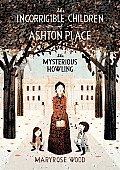
The Mysterious Howling by Maryrose Wood (for girl turning 12)

The first book in the Incorrigble Children of Ashton Place series.
Found running wild in the forest of Ashton Place, the Incorrigibles are no ordinary children: Alexander, age ten or thereabouts, keeps his siblings in line with gentle nips; Cassiopeia, perhaps four or five, has a bark that is (usually) worse than her bite; and Beowulf, age somewhere-in-the-middle, is alarmingly adept at chasing squirrels.
Luckily, Miss Penelope Lumley is no ordinary governess. Only fifteen years old and a recent graduate of the Swanburne Academy for Poor Bright Females, Penelope embraces the challenge of her new position. Though she is eager to instruct the children in Latin verbs and the proper use of globes, first she must help them overcome their canine tendencies.
But mysteries abound at Ashton Place: Who are these three wild creatures, and how did they come to live in the vast forests of the estate? Why does Old Timothy, the coachman, lurk around every corner? Will Penelope be able to teach the Incorrigibles table manners and socially useful phrases in time for Lady Constance's holiday ball? And what on earth is a schottische?


I haven't read this one, but I loved the concept (children raised by wolves and whatnot) and it seems endearingly cheeky. I also like giving first-in-a-series books because if the recipient enjoys it they can continue along with the series.

The child in question has already received this book, but I haven't had word on what she thought of it, if she's even read it yet.

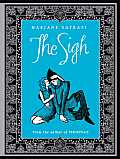
The Sigh by Marjane Satrapi (for girl turning 8)

Rose is one of three daughters of a rich merchant who always brings gifts for his girls from the market. One day Rose asks for the seed of a blue bean, but he fails to find one for her. She lets out a sigh in resignation, and her sigh attracts the Sigh, a mysterious being that brings the seed she desired to the merchant. But every debt has to be paid, and every gift has a price, and the Sigh returns a year later to take the merchants daughter to a secret and distant palace.
I wasn't familiar with The Sigh before I happened across it on a table in the children's section of the Strand. I do like Marjane Satrapi. The Sigh is more illustrated book than graphic novel and it is suitable for all ages (per the cover at least, I flipped through and didn't see anything questionable).

Saturday, March 24, 2012

reading H.P. Lovecraft

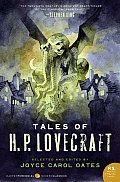
Even though I'm not supposed to be buying books for myself, I did pick up one during this latest blog-neglecting period. When I was book shopping for my nieces and nephews (a post on that topic coming soon) I happened across this deeply discounted title: Tales of H.P. Lovecraft, introduced and selected by Joyce Carol Oates. Now that we (finally) have a copy of Arkham Horror, a board game built around H.P. Lovecraft's Cthulhu Mythos, I felt it was high time that both Russell and I read Lovecraft's work (and I love the cover art). I also figure that I might as well share my thoughts on the individual stories on the blog. So far I've read the first three.

The stories included in Tales of H.P. Lovecraft are supposedly his major works. I'm not sure if the stories are arranged chronologically or with any rhyme or reason and I don't remember reading anything about that the arrangement in the volume's introduction.

Joyce Carol Oates' Introduction (9.5 pages)
I appreciated getting a bit more biographical information about Lovecraft. What a horrible, horrible mother he had. JCO references many writers while placing Lovecraft in the context, explains the Cthulhu Mythos and its origins, identifies the overlap of Lovecraft's imaginary geography with areas in the Northeast United States, and outlines reader response. However some of the most interesting bits of the essay aren't specific to Lovecraft and his work.

JCO on the difference between genre and literary fiction:
Readers of genre-fiction, unlike readers of what we presume to call "literary fiction," assume a tacit contract between themselves and the writer: they understand that they will be manipulated, but the question is how? and when? and with what skill? and to what purpose? However plot-ridden, fantastical or absurd, populated by whatever pseudo-characters, genre-fiction is always resolved, while literary fiction makes no such promises; there is no contract between reader and write for, in theory at least, each work of literary fiction is original, and, in essence, "about" its language; anything can happen, or, upon occasion, nothing. Genre fiction is addictive, literary fiction, unfortunately is not. (xiii)
Nostalgia: "To love the past, to extol the past, to year in some way to inhabit the past is surely to misread the past, purposefully or otherwise; above all, it's to select from the past only those aspects that accommodate a self-protective and self-nourishing fantasy" (xi).
"The Outsider" (5+ pages)
Even though I'm pretty sure that I had not previously read any Lovecraft, I was struck with profound sense of déjà vu when reading "The Outsider." A disappointing start to the collection, short with its surprise ending so obviously that even twist seems inappropriate.

"The Music of Erich Zann" (7 pages)
A bit creepier, but the framed narrative gives the reader a bit too much distance.

"The Rats in the Walls" (16 pages)
Finally a really good ending. "The Rats in the Walls" gave me hope for both Lovecraft and this volume.

Friday, March 23, 2012

my thoughts on Hunger Games fever


I love, love, love the Hunger Games Trilogy,1 but I’m not planning on seeing the movie.

While I'm pleased that the movie (and surrounding media hype) has helped many to discover the books, I'm avoiding it like the plague. I have decidedly mixed feelings about film adaptations (some I love, some I loathe), but because I love the series so much I’m resisting Hollywood’s need to show me how they think characters, places, scenes should look. And, of course there are some bits that are horrifying enough in my head that I really really don’t need to see them played out on the big screen.

The movie buzz has been irritatingly pervasive: tv, print media, the blogosphere, merchandise...
by the way I highly recommend SyFy's FaceOff, a Project Runway-like reality show focusing on special effects makeup, despite the fact that they felt the need to beat into viewers heads trumpet the judges' involvement with the HG movie.

In case any of you are wondering, I'm not going to be getting nail polish. I understand that a HG nail polish collection can be viewed as tongue-in-cheek, but I can't get past how out of line it is with the overarching theme of the series.
  1. Hunger Games, Catching Fire, and Mockingjay.

Tuesday, March 20, 2012

miss me?

I've been neglecting the blog again.

While I've thought about posting a number of times over this break, the fact that I didn't is evidence of my ambivalence about the blog.  I definitely have a love/hate relationship with this blog (with more hate than love).  I cycle between wanting to give up on it entirely and desiring to be "a better blogger" and post more regularly.  When you make something you enjoy (in this case reading and talking about books) into work, it tends to become a lot less enjoyable.

I started this blog in 2006 because I was encouraged to do so. At first I found the writing of it both novel and fun, later I became more serious about posting what I thought of as "proper" reviews. For ages, though, it seems that I've been in this place of profound ambivalence about the blog. I don't get many comments, but I don't feel like I have the right to complain about it because as a blog reader I comment infrequently (but in the absence of comments its impossible to know whether anyone is actually reading what one writes). I don't have many followers, but the market for book blogs is over-saturated and I really haven't made a concerted effort to gain followers (my explorations into regular weekly follow memes yielded a reader overcrowded with blogs I didn't particularly want to read and few new followers). During one of my periodic blog-subscription weedings (when I was actually posting regularly), I was shocked to see that someone who hadn't posted in over a year still had easily ten times more followers that I did.

The point of this post is just to communicate a bit of what I'm feeling about this project and to see whether it engenders any response. I'm not giving up on the blog entirely yet and I do intend to get back into a regular posting cycle, but I'd appreciate hearing from those of you who read the blog (when I do post) even if it's just an acknowledgment that you do read my posts every once in a while.

Now I'm off to read Boneshaker by Cherie Priest, which Russell picked up for me at the library today. I'm looking forward to it.

Sleepy Hollow (in The Book of Lost Fragrances)

I mentioned in this post that Sleepy Hollow appears in M.J. Rose's The Book of Lost Fragrances. It's focus is on the famous Sleepy Hollow Cemetery:
Forty-five minutes later the aroma of towering pines and newly blooming redbud trees informed Jac they'd reached the Sleepy Hollow Cemetery, nestled in the lush Hudson River Valley. [...]
For the last 160 years, all of her mother's family had been buried in this Victorian cemetery that sat high on a ridge overlooking the Pocantico River. Having so many relatives in this overgrown memorial park made her feel strangely at home. [...] (28-29)
Oh, how this passage perplexes me particularly since, according to her bio, M.J. Rose lives in Connecticut and so could have easily visited the landmark.

Sleepy Hollow Cemetery is indeed "nestled in the lush Hudson River Valley," but while said valley has some pines, they do not dominate the landscape and scent the air (particularly when driving on route 9, the only way to get to the cemetery). In fact the trees in the area are primarily deciduous. As for redbud trees, I've never noticed them, but I will pay attention come spring. Apparently they are native to the area though.

The Pocantico River "meander[s] gently just a few steps away" from part of the cemetery, but the cemetery isn't high on a ridge overlooking anything (well, the large mausoleum overlooks route 9, I suppose).

The "overgrown memorial park" combined with mentions of winding roads that I didn't include in the quote above, makes the cemetery sound enormous. It's 85 acres, which isn't particularly big especially for a suburban cemetery. By way of comparison Woodlawn Cemetery in the Bronx is 400 acres, Forest Lawn in Buffalo is 250 acres, and Arlington is 624 acres.

I'm sure that I sound unnecessarily critical and nickpicky here, but I'm just disappointed (and I did succeed in resisting the urge to pick at the use of "Victorian"). It wouldn't have been difficult to write a more accurate description of the cemetery and its environs and that would have made all the difference to me.

Tuesday, February 07, 2012

scent and a review of
The Book of Lost Fragrances

I reviewed Chandler Burr's The Perfect Scent almost exactly two years ago (see review). Since then I've nearly finished a bottle of Hermés' Un Jardin sur le Nil, one of the perfumes whose development Burr chronicles in the book, and developed a fascination with perfume. Reading about perfume can be quit difficult because it requires fragrance vocabulary (chypre? that means: with citrus top notes and woodsy base notes) and an extensive flavor knowledge (vetiver? that's a grass native to India; no idea what it smells like) in order to describe something that is highly experiential. I follow a number of fragrance blogs and make note of perfumes that sound like something I might like, but I'll admit that it really still is all Greek to me. I'm beginning to figure out how scents I enjoy are commonly described, but I'd never be able to a purchase a perfume scent unsniffed.

A week or two ago my friend Nancy (another fragrance enthusiast) pointed me to author M.J. Rose's new book, The Book of Lost Fragrances, and the fact that individuals who preorder it can get a free sample of a perfume inspired by the novel (this promotion ends March 1, details here). I really love the fact that there is a fragrance tie-in to this book and I think it might actually get me to preorder the book if I had a budget for personal book acquisition and made a practice of buying hardcovers when they first came out. I'd already requested a review copy from Atria Books, a Simon and Schuster imprint, via NetGalley so I decided that I'd read it sooner rather than later.

The Book of Lost Fragrances by M.J. Rose

After the death of their father, Robert and Jacinthe L'Etoile inherit the family's distinguished perfume house, which is on the brink of financial ruin. Tensions between the siblings are high. Jac wants to sell two of the house's signature fragrances to keep the business afloat, while Robbie believes that he can find another way to save the struggling firm.

Family lore holds that a L'Etoile ancestor traveled to Egypt where he found a book formulas from Cleopatra's fragrance factory, which included a soul-mate perfume. When Robbie disappears after discovering what seems to be an priceless antiquity in their father's studio, ever-sceptical Jac is forced to consider the fact that the ancient memory aid might be more than just a legend and that people are willing to kill for it.

The novel's prologue takes the form of a 2007 newspaper article about a new regulation issued by China's State Administration for Religious Affairs that bans the reincarnation of Tibet's living Buddhas without permission. The Book of Lost Fragrances' narrative follows a number of different characters including a few Chinese and Tibetan throughout, but the direct connection to House of L'Etoile is made when Robbie, a practicing Buddhist, announces his plan to give the artifact to the Dalai Llama.

The Book of Lost Fragrances is compelling reading, but I think that it could have been better. I don't mind the choppy narrative, that happens when perspective changes as often as it did, but there seemed to be a bit too much in the way of digression which is problematic in a thriller where tension is so important. Additionally some things about the plot felt forced or too convenient and some of the twists were obvious to me quite far off.

I did like extent to which scent was incorporated into the story and I loved that the siblings had a special scent language that they developed as children. I also appreciated the author's note, in which Rose separates fact from fiction.

There's a description of Sleepy Hollow that I'll highlight in a separate post.

The Book of Lost Fragrances will be released in mid March.
disclosure: I received a review copy of The Book of Lost Fragrances from Atria Books via NetGalley.
Sunday, February 05, 2012

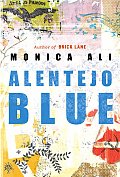
Alentejo Blue by Monica Ali
(and Brick Lane)

Alentejo Blue by Monica Ali

I read Monica Ali's debut novel, Brick Lane, in 2006 (see below). I enjoyed it so I'm not quite sure why it took me almost three years (bookcrossing tells me that I've had Alentejo Blue on my shelf since March 2009) to read Alentejo Blue. I do wish that I enjoyed Alentejo Blue as much as Brick Lane.
Alentejo Blue is a novel centered on a rural village in south-central Portugal. Its chapters focus on individuals living in or visiting the village (it opens with an elderly man finding his friend--and sometimes lover--has hanged himself, the second chapter follows a British author who has sex with two inappropriate partners just because it's something to do) making it read, at first like a collection of short stories set in the same place rather than a novel. As the novel progresses, threads begins to tie the various chapters together. While the novel had some moments, I found it bleak. Honestly I finished reading Alentejo Blue out of stubbornness.

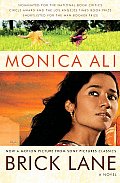
Brick Lane by Monica Ali

Here's what I thought about Brick Lane when I read it in 2006 (from my copy's bookcrossing journal):

I can understand why this book was shortlisted for the Booker Prize. I'm amazed, though, that this was the authors debut novel. What an achievement!

Ali explores universal themes on a very personal level. The driving force of the novel, the protagonist, Nazneen, is fully realized and sympathetic.
The novel has a certain weight and urgency, which makes it all the more readable, though it did seem to drag at times.

This is one of my favorite passages:
How had it happened? It was as if she had woken one day to find that she had become a collector, guardian of a great archive of secrets, without the faintest knowledge of how she had got started or how her collection has grown. (313)
I also loved the ending.

Friday, February 03, 2012

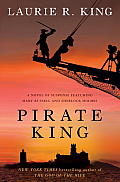
The Pirate King by Laurie R. King

The Pirate King by Laurie R. King

Mary Russell, wife and current (1924) assistant to and chronicler of Sherlock Holmes and his adventures, goes undercover at Fflytte Films at the request of Scotland Yard's Chief Inspector Lestrade. The studio's secretary has gone missing, but more significantly, strange coincidences follow the giant of the British film industry whose reputation has been built based on its realism for example, an increase in drug trafficking after a film about a woman and her drug use. Fflytte's current project, "Pirate King is about a film crew that's making a picture--which is also called Pirate King--about The Pirates of Penzance. The picture's director--the fictional director, not Randolph Fflytte--is dissatisfied with the looks of the men in England, so he takes the production to Lisbon to hire some swarthy types, only to have their boat captured by actual pirates" (39). Russell replaces the missing secretary and joins the cast and crew on a boat destined first for Portugal and then Morocco.

Published in September 2011 The Pirate King is the 11th installment in Laurie R. King's Mary Russell and Sherlock Holmes mystery series. I requested a review copy of the novel, despite not having read any of the other books in the series, since I was in the mood for a dose of Sherlock Holmes. I'm pretty open-minded when it comes to adaptations, sequels of classics written by contemporary writers, et cetera, and I was intrigued with the idea of Holmes having taken a wife.

Now, I'll admit right now that I didn't finish the book, which is not to say that I didn't give it the old college try. I read 100+ pages before I threw in the towel. Why didn't I finish it? The plot was overcomplicated--even the "author" Mary Russell says in her author's note, "I fear that the credulity of many readers will be stretched to the breaking by the case's intricate, and shall we say, colourful complexity of events" (10)--and the mystery wasn't compelling to me.

Mary Russell, who seems to have taken over for Dr. Watson, is the sole investigator (through chapter 15 at least). Holmes appears only at the very beginning of The Pirate King when he convinces her to go along with Lestrade's plan and as an addressee for Russell's correspondence from the field. This would likely not be a problem for series fans, but it was a source of great disappointment for me. While the film-within-a-film bit was complicated enough especially considering the studio's strict adherence to realism and insistence on not making changes to the film's script, King adds in an abundance of secondary characters a number of whom are excessively complicated themselves (case in point: the Portuguese translator with multiple personalities born out of intellectual need). Where I stopped reading more than a third of the way through, the story was still so bogged down in set-up that I'd nearly forgotten that Russell was supposed to be getting to the bottom of some sort of mystery.

I assume that fans of Mary Russell and this series will enjoy The Pirate King. I'd caution others not to use The Pirate King as an introduction to the series, but to start at the beginning with The Beekeeper's Apprentice.
disclosure: I received a review copy of The Pirate King from Random House via NetGalley.
Monday, January 30, 2012

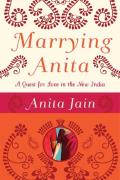
Marrying Anita by Anita Jain

Marrying Anita: A Quest for Love in the New India by Anita Jain

A few months ago, I mentioned receiving Marrying Anita as a gift for my birthday (see post). Marrying Anita is a memoir in which the author recounts what happened when she, a 32-year-old Indian-American, grew tired of the New York dating scene decided to return to move to New Delhi to find a husband. Just to be clear, the book is not about arranged marriage despite the phrase-dropping in the synopsis and press coverage. Arranged marriage is discussed because it is an integral part of Indian culture, but the author's personal experience with arranged marriage is limited to her father managing profiles on online marriage sites for her.
I'd heard Jain interviewed on NPR when the book first came out, which is how Marrying Anita ended up on my wishlist. I have to admit that while I was intrigued by the premise, I was a bit reticent about reading it because of the baggage I carry from my first-hand experience1 with India's marriage culture. I did read Marrying Anita though and I'm none worse for the wear.

Marrying Anita really wasn't what I expected. A full explanation would require including some spoilers and I don't like to do that. I'll stick with the things that I can mention without ruining things for future readers of the memoir. I was surprised at how open Jain is about her liaisons (and drinking and drug use). I imagine her parents being horrified and their more conservative friends and relatives (who no doubt read the book as soon as it was released) significantly more so. Jain makes much of this New India, but what's deemed acceptable among the nation's young urbanites is not necessarily indicative of culture-wide acquiescence.

I had a hard time relating to the author-narrator. I found Jain's need to pepper her narrative with SAT words (plangency2 appears in the second paragraph of her prologue) a bit irritating, but I was able to ignore that as I became accustomed to her writing style. More significantly, her actions and the harshness with which she describes individuals was off-putting. It seemed like every time I warmed up to Jain, she went ahead and did or said something that made me dislike her again. I do wonder though how the book's publication has affected her life and her love life.

Marrying Anita's synopsis mentions "disarming candor" and "refreshingly honest". The author is honest and candid, often disarmingly so, but unfortunately I didn't find Marrying Anita refreshing.
  1. as an inappropriate potential bride
  2. plangency - n. resonance (possibly deep resonance or mournful resonance)

Friday, January 27, 2012

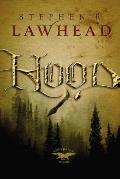
Stephen Lawhead's King Raven Trilogy

Stephen Lawhead's King Raven Trilogy


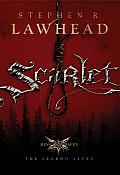
I read through most of Stephen Lawhead's King Raven Trilogy while I was sick with the worst cold ever earlier this month. From the series' titles (Hood, Scarlet, and Tuck), it's fairly obvious that it's a retelling of the legend of Robin Hood. I don't remember acquiring the books in the trilogy, but I suspect that they came from my dad. Russell and I found then when we were going through our book collections pre- and post-move and decided to keep them since we were both somewhat interested in reading the series (I graciously offered to make space for the books on one of my bookshelves rather than making Russell house them on one of his).

In any case, the trilogy is set in late 11th century Wales. Lawhead seems concerned that readers will find fault with this relocation of Robin and his merry men and he outlines his reasoning for doing so in the novels' afterwords. For what it's worth, I think his case is solid. Lawhead's Robin Hood is a Welsh prince named Bran (raven). His father, the king of Elfael, is killed in an ambush and the kingdom ceased by a Norman nobleman (with the blessing of William II). Rhi (king) Bran takes to the forest from whence he and his supporters plague the Normans.

Overall the series is an interesting and enjoyable read. Lawhead incorporates Celtic mythology and believable period political intrigue into the legend. My one big complaint is about how and when the "Friar Tuck" and "Little John" monikers were introduced (too soon, too close to one another, and, in the case of Little John, in too contrived a way). The other thing I found strange about the series has to do with the progression of narration. The second book, Scarlet, is the first person narrative of one of the Bran's supporters. I didn't dislike the way the story was told in the second installment, in fact I quite liked the framed narrative, but reading the books one right after the other I was struck by the incongruity of the series narration.

Wednesday, January 25, 2012

word: fair

Earlier today I happened upon a set of old articles on ALTA Language Services' Beyond Words blog thanks to the University of Chicago Magazine's twitter account.

October 2008's Ten most difficult words to translate was followed by May 2009's Five more difficult words to translate. This set of fifteen possibly untranslatable words comes from an eclectic set of languages (including a few with which I was completely unfamiliar). The only English word on the list was fairness, which was the subject of an Atlantic Monthly article and Beyond Words blog post earlier in 2009.

In Does fairness translate?: an economist and a linguist delve into the cross cultural variation of what we consider fair blog author Manny fulls together the various threads of the debate sparked by Bart Wilson's Atlantic Monthly article in what he refers to as a "nerdy linguistic mashup" and it's fascinating.

Is the concept of fairness uniquely Anglo-American? I don't think so, but I thought it might be interesting to take a look at our 1956 edition of A Dictionary of Americanisms on Historical Principles, edited by Mitford M. Mathews of the U of C Press's now defunct Dictionary Department.
The word fair's first appearance (p. 577) explicates its usage as a noun as in a country fair or a church fair, with a mention of American football's fair ("technical name of putting the ball in play from the side line when out of bounds" per P.H. Davis, 1911).
More relevant to the question at hand are fair's adjectival uses (577-578). Interestingly the first entry regards the classification of cotton by quality. The various baseball-related uses (ie. fair vs. foul) appear second and never stray from the technical into the philosophical (n.b. fair ball is substantial enough to warrant its own entry). The third entry pertains to the finish of leather on leather goods. The fourth and final annotation delineates a number of frequent compound words/phrases (fair catch, fair-haired, fair shake, etc.).

Wednesday, January 18, 2012

the Hufflepuff scarf or proof that I love my sister

Normally I'm happy to have any excuse to include knitting projects on this blog, but I needed a bit of distance from this seemingly neverending one.

Last fall my sister requested a house scarf (she's a Hufflepuff) like the ones in the Prisoner of Azkaban film (here's a shot of Hermione in hers). She wanted it in time for the release of the final movie.

I started it on December 19th (plenty of time, right?), but I didn't finish it until September 26th (far, far after the film's opening day). Why'd it take so long? Mostly because the scarf is double layered. It was knit in the round, 90 stitches per row, and required 9 skeins of yarn. My progress was so slow that I avoided working on the project. Eventually, though, I forced myself to knit the scarf exclusively (I always have quite a few different projects on the needles at a time) until I finished it. Finishing it the day before my birthday was my birthday gift to myself.

Happily my sister loves the scarf and has gotten compliments on it whenever she's worn it.


Pattern: Prisoner of Azkaban Scarf by Lauren Kent
Yarn: Knit Picks Capra (85% Merino Wool, 15% Cashmere) in Honey and Black
Full details: Project on Ravelry

Sunday, January 15, 2012

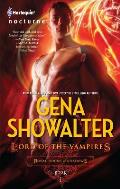
Lord of the Vampires by Gena Showalter

Lord of the Vampires by Gena Showalter

Lord of the Vampires is the first book in Harlequin's Royal House of Shadows series, a set of four paranormal romances, each based based on a fairy tale. Lord of the Vampires is inspired by Lewis Carroll's Alice in Wonderland and Jill Monroe’s Lord of Rage by "Goldilocks and the Three Bears," while Lord of the Wolfyn by Jessica Andersen is based on "Little Red Riding Hood" and Nalini Singh's Lord of the Abyss on "Beauty and the Beast."

I haven't read any of the other books in the Royal House of Shadows series and based on my experience with Lord of the Vampires, I'm not sure that I'd want to. I like the premise of the series, which is why I requested a review copy of the first installment, but I'm baffled by the execution. I really did not enjoy Lord of the Vampires at all. The only reason that I didn't give up on the novel entirely is that I'd been promised a retelling of a fairytale (at the time that I was reading the novel I didn't know which tale Showalter had taken as her inspiration) and I was determined to find that story. I didn't, though. Alice in Wonderland didn't cross my mind as a possible inspiration because it is not a fairy tale. And while looking back now I can see how Showalter used Alice in Wonderland as a jumping-off point, I'm not sure that I'd have seen Alice in Wonderland in Lord of the Vampires without having been told to.

While the lack of an obvious fairy tale inspiration was a disappointment to me, it was by no means the only one. I couldn't connect to either the hero or the heroine and, more important given the fact that Lord of the Vampires is a romance novel, their relationship lacked any semblance of romance. Yes, there was sexual chemistry, but lust and ownership completely overwhelmed any bit of connection I saw between the two. Jane was not a sympathetic character and her willingness to go along with Nicolai made little sense in the face of his treatment of her. The only thing Nicolai had going for him was magnetic sexuality. He was domineering and manipulative and he lacked much in the way of redeeming characteristics.

The story was over complex difficult to follow with its multiple flashbacks and magic-induced memory loss (maybe this confusion is an intentional nod to Alice in Wonderland) and it succeeds in feeling both slowly paced and rushed. Suffice it to say that I couldn't wait for this one to end. I haven't read much of Showalter's work (just one of her young adult novels), but I suspect that Lord of the Vampires not typical given how strong her following is.
disclosure: I received a review copy of Lord of the Vampires from Harlequin Nocturne via NetGalley.
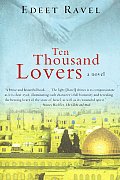
Ten Thousand Lovers by Edeet Ravel

Ten Thousand Lovers by Edeet Ravel

Ten Thousand Lovers is one of those books that has been sitting on my shelves for quite some time (more than five years according to its Bookcrossing journal). It survived the great library purge of 2011 despite the fact that I've had no compelling urge to read it in all that time. Why? Well, the cover art is quite beautiful, it has a medallion indicating that it was a finalist for Canada's Governor General's Award, and its back-cover text is quite enticing, particularly this bit:
In today's world, where danger, terrorism and the possibility of war are part of all our lives, no novel could be more brilliantly, terrifyingly contemporary. Yet Ten Thousand Lovers is set in Israel in the Seventies: a dazzling backdrop to a universal story of passion, suffering and the transcending power of love.
Ten Thousand Lovers was in an easy-to-reach section of my bookshelves and after grabbing it from there recently, I decided to go ahead and read it for the reasons mentioned above.

Lily is now an academic in England. Her daughter is of an age and embarking on her first serious relationship. Ten Thousand Lovers is Lily's reflection on that time in her own life. Though Lily spent her earliest years on a kibbutz, she is more Canadian than Israeli when she returns to Israel for college and meets a man whose job working for the Israeli army as an interrogator fills her with distaste.

Lily's recounting of her relationship with Ami is full of semantic digressions. A linguist, she can't help but explain the origins and meanings of the words that comprise their story. Rather than being distracting, these digressions inform the story and serve to better explicate the situation in Israel both at the time the story takes place and now.

Ten Thousand Lovers is a beautifully written novel. It is moving and sad and filled with truisms ("you can't quantify unhappiness," p. 296). It is a story that begs to be read and one that will stick with its readers long after they close the novel's covers.

Sunday, January 08, 2012

and on into 2012

The plan for this coming year is to post more consistently than I have recently.  I don't plan to post every day (I still have the big writing project which must be attended to), but I'd like to share my thoughts on the majority of the books I read even if that means more in the way of informal comments than proper reviews.  I also need to write up posts for a number of books that I should have reviewed in 2011 (see better-late-than-never tag).

Saturday, January 07, 2012

books read in 2011: 101-137

137. Books Can Be Deceiving by Jen McKinley
136. City of Secrets by Mary Hoffman (reread)
135. The Grand Tour by Wrede & Stevermer (reread; see post)
134. Goliath by Scott Westerfeld
133. Behemoth by Scott Westerfeld (reread)
132. Leviathan by Scott Westerfeld (reread; see post)
131. Sorcery and Cecelia by Patricia Wrede and Caroline Stevermer (reread; see post)
130. Carnal Machines, edited by D.L. King
129. Nairobi Heat by Mukoma Wa Ngugi
128. Legacy by Katherine Webb
127. The Flame of Surrender by Rhiannon Paille
126. The Inquisitor's Apprentice by Chris Moriarty
125. The Ersatz Elevator by Lemony Snicket
124. Mockingjay by Suzanne Collins (reread)
123. The Austere Academy by Lemony Snicket
122. Catching Fire by Suzanne Collins (reread)
121. The Hunger Games by Suzanne Collins (reread)
120. Beauty Queens by Libba Bray (see post)
119. Maid to Match by Deeanne Gist (see post)
118. Viridis by Calista Taylor (see post)
117. The Particular Sadness of Lemon Cake by Aimee Bender
116. Ghost Brigades by John Scalzi
115. The Battle of the Labyrith by Rick Riordan
114. The Broken Teaglass by Emily Arsenault
113. The Miserable Mill by Lemony Snicket
112. The Egyptian by Layton Green
111. Lord of the Vampires by Gena Showalter
110. The Wide Window by Lemony Snicket (reread)
109. The Reptile Room by Lemony Snicket (reread)
108. The Bad Beginning by Lemony Snicket (reread)
107. Clockwork Heart by Dru Pagliasotti (see post)
106. Call Me Princess by Sara Blaedel
105.
Divergent by Veronica Roth (see post)
104. Woman's World by Graham Rawle (see post)
103. One of Our Thursdays is Missing by Jasper Fforde
102. First Among Sequels by Jasper Fforde (reread)
101. Something Rotten by Jasper Fforde (reread)

books read in 2011: 51-100

100. The Well of Lost Plots by Jasper Fforde (reread)
99. Lost in a Good Book by Jasper Fforde (reread)
98. Bumped by Megan McCafferty (see post)
97. Everything Beautiful Began After by Simon Van Booy
96. The Monstrumologist by Rick Yancey (see post)
95. Delirium by Lauren Oliver (see post)
94. The Keeper of Lost Causes by Jussi Adler-Olsen (see post)
93. Such a Pretty Fat by Jen Lancaster (see post)
- The Thrall's Tale by Judith Lindbergh (gave up around p.190; see post)
92. City of Flowers by Mary Hoffman (reread)
91. Hairdresser of Harare by Tendai Huchu
90. Near Witch by Victoria Schwab
89. Stories for Nighttime and Some for the Day by Ben Loory (see post)
88. The Girl with the Steel Corset by Kady Cross
87. Diamond Age by Neal Stephenson (see post)
86. City of Stars by Mary Hoffman (reread)
85. Assassin's Quest by Robin Hobb
84. Royal Assassin by Robin Hobb
83. Assassin's Apprentice by Robin Hobb (see post)
82. The Courtier's Secret by Donna Russo Morin (see post)
81. Eutopia by David Nickel (see post)
80. Life from Scratch by Melissa Ford (see post)
79. The Mysterious Benedict Society by Trenton Lee Stewart (see post)
78. Spellbound by Cara Lynn Shultz (see post)
77. Legacy by Cayla Kluver (see post)
76. Heartless by Gail Carriger (see post)
75. City of Masks by Mary Hoffman (reread)
- The Sportsman by Dhani Jones (gave up on this one; not my cup of tea)
74. Everything We Ever Wanted by Sara Shepard (see post)
73. Blameless by Gail Carriger (see post)
72. Changeless by Gail Carriger  (see post)
71. Ghost Ship by P.J. Alderman
70. The Iron Duke by Meljean Brook (see post)
69. Domestic Violets by Matthew Norman (see post)
68. Book of Lies by Mary Horlock (see post)
67. Soulless by Gail Carriger (see post)
66. The Dream of Perpetual Motion by Dexter Palmer (see post)
65. The Maid by Kimberly Cutter (see post)
64. The Poisoned House by Michael Ford (see post)
63. Tiny Sunbirds, Far Away by Christie Watson (see post)
62. Stranger by Zoe Archer (see post)
61. First Impressions by Debra White Smith
60. Steampunk! An Anthology of Fantastically Rich and Strange Stories (see post)
59. Mercy by Rebecca Lim (see post)
58. Mothers and Daughters by Rae Meadows (see post)
57. Agatha Heterodyne and the Beetleburg Clank by Kaja and Phil Foglio
56. The Goddess Test by Aimee Carter (see post)
55. White Woman on the Green Bicycle by Monique Roffey (see post)
54. The Unthinkable Thoughts of Jacob Green by Joshua Braff (see post)
53. Motel of Mysteries by David Macaulay (see post)
52. Hotel Angeline, 36 authors (see post)
51. The Girl Who Kicked a Hornet's Nest by Stieg Larsson

Final report on 2011 Take a Chance Reading Challenge

I made a stab at the Take a Chance Reading Challenge (see post) last year and while I did read some books I might not have otherwise, I didn't perform terribly well.

1. Staff Member’s Choice: Go to a bookstore or library that has a “Staff Picks” section. Read one of the picks from that section.
From Buffalo, NY independent book store Talking Leaves' Staff Book Recommendations page:
The Magicians by Lev Grossman recommended by Alicia (never got around to reading this one)
I did try to check out the staff recommendations in person in December/January, but couldn't find them in the Main Street location before I was overpowered by the strange fishy mildew smell that permeated the shop.
2. Loved One’s Choice: Ask a loved one to pick a book for you to read. (If you can convince them to buy it for you, that is even better!)
Jessica - gave me a choice:
- Delirium by Lauren Oliver (read in September)
- Will Grayson Will Grayson by John Green
- A Proper Education for Girls by Elaine diRollo
- The Spellmen Files by Lisa Lutz
I'll likely read the others at some point.
Nancy - Woman's World by Graham Rawle (read in September)
Russell - something by Neal Stephenson (read The Diamond Age in June; full disclosure: he wanted to make me read all three volumes of The Lord of the Rings, but I talked him out of it)
3. Blogger’s Choice: Find a “Best Books Read” post from a favorite blogger. Read a book from their list.
Never got around to going through lists.  I'm sure I could find something to count for this category, but that would defeat the point of this challenge, which is to to read with intention.
4. Critic’s Choice: Find a “Best of the Year” list from a magazine, newspaper or professional critic. Read a book from their Top 10 list.
Here's Library Journal's first ever best of list:
- By Nightfall by Michael Cunningham
- Room by Emma Donoghue
- American Terroir: Savoring the Flavors of Our Woods, Waters, and Fields by Rowan Jacobsen
- The Immortal Life of Henrietta Lacks by Rebecca Skloot
- The Warmth of Other Suns: The Epic Story of America's Great Migration by Isabel Wilkerson
None read.
5. Blurb Book: Find a book that has a blurb on it from another author. Read a book by the author that wrote the blurb.
I'm going to skip this one.
6. Book Seer Pick: Go to The Book Seer and follow the instructions there. Read a book from the list it generates for you.
Using The Girl with the Dragon Tattoo yielded the following suggestions:
- The Girl Who Played with Fire by Stieg Larsson (2nd in series; read in April)
- The Girl Who Kicked the Hornets' Nest by Stieg Larsson (3rd in series; read in April)
- One Day by David Nicholls
- The Help by Kathryn Stockett (see #9 below; is nothing like Dragon Tattoo)
- The Snowman by Jo Nesbo
- Wolf Hall by Hilary Mantel
- Sister by Rosamund Lupton
- The Guernsey Literary and Potato Peel Pie Society by Mary Ann Shaffer (already read; is nothing like Dragon Tattoo)
- The Redbreast by Jo Nesbo
7. What Should I Read Next Pick: Go to What Should I Read Next and follow the instructions there. Read a book from the list it generates for you.
Inputting Hunger Games by Suzanne Collins yields diverse results. Among them are City of Bones by Cassandra Clare (read in April).
8. Which Book Pick: Go to Which Book and use the software to generate a list of books. Read a book from that list.
I'm skipping this one. The selection criteria are too vague to be useful to me.
9. LibraryThing Pick: Go to LibraryThing’s Zeitgeist page. Look at the lists for 25 Most Reviewed Books or Top Books and pick a book you’ve never read. Read the book. (Yes... you can click on MORE if you have to.)
Apparently I've read all but three of the "25 most reviewed books" on LibrayThing (as of January):
- Any Given Doomsday by Lori Handeland
- The Graveyard Book by Neil Gaiman (I intended to read this one as well, but I never got around to getting my hands on a copy)
- The Help by Kathryn Stockett (read in February)
10a. Public Spying: Find someone who is reading a book in public. Find out what book they are reading and then read the same book. Write about it.
I'm dropping this one. I never realized how hard it was to see what people are reading when they are reading in public. Oh you can see that they are reading a mass market paperback or an e-reader, but unless a book has a really distinctive cover... and, well, I don't like asking strangers about what they are reading.
10b. Random Bestseller: Go to Random.org and, using the True Random Number Generator, enter the number 1950 for the min. and 2010 for the max. and then hit generate. Then go to this site and find the year that Random.org generated for you and click on it. Then find the bestseller list for the week that would contain your birthday for that year. Choose one of the bestsellers from the list that comes up, read it and write about it.
Ditto. I realized that I really didn't want to spend my time reading bestsellers from September 1975.
Wednesday, January 04, 2012

books read in 2011: 1-50

50. Frost Moon by Anthony Francis (see post)
49. The Girl Who Played with Fire by Stieg Larsson
48. City of Glass by Cassandra Clare
47. Pleasure Grounds, J. Haley, editor
46. City of Ashes by Cassandra Clare
45. City of Bones by Cassandra Clare (see post)
44. The Lady Most Likely by Julia Quinn
43. Homicide in Hardcover by Kate Carlisle
42. Strange Neighbors by Ashlyn Chase
41. Millie's Fling by Jill Mansell
40. Steamed by Katie MacAlister (see post)
39. Last Sacrifice by Richelle Mead
38. Nicola and the Viscount by Meg Cabot
37. Host by Stephenie Meyer (reread; see post)
36. Flawless by Sara Shepard
35. Spirit Bound by Richelle Mead
34. The Luxe by Anna Godbersen
33. Clara and Mr. Tiffany by Susan Vreeland
32. Blood Promise by Richelle Mead
31. Baby, Don't Go by Susan Andersen
30. Insatiable by Meg Cabot
29. Head over Heels by Susan Andersen
28. Beastly by Alex Flinn (see post)
27. The Help by Kathryn Stockett (see post)
26. Possessed by Elif Batuman (see post)
25. Shades of Grey by Jasper Fforde (see post)
24. Alphas by Lisi Harrison (see post)
23. Victoria and the Rogue by Meg Cabot
22. Day the Falls Stood Still by Cathy Marie Buchanan
21. Bright Young Things by Anna Godbersen (see post)
20. Sugar and Spice by Lauren Conrad
19. His Wicked Promise by Samantha James
18. The Titan's Curse by Rick Riordan
17. Sweet Little Lies by Lauren Conrad
16. The Summoner by Layton Green (see post)
15. Sweetblood by Pete Hautman (see post)
14. Evernight by Claudia Gray (see post)
13. King of Attolia by Megan Whalen Turner (see post)
12. Queen of Attolia by Megan Whalen Turner (see post)
11. Girl with the Dragon Tattoo by Stieg Larsson (reread; see post)
10. The Devil Wears Plaid by Teresa Medeiros
9. The Thief by Megan Whalen Turner (see post)
8. Pretty Little Liars by Sara Shepard
7. Shadow Kiss by Richelle Mead
- Fallen by Lauren Kate (see post)
6. Corduroy Mansions by Alexander McCall Smith (see post)
5. City of Ember by Jeanne DuPrau
4. L.A. Candy by Lauren Conrad (see post)
3. Peeps by Scott Westerfeld (see post)
2. His Wicked Ways by Samantha James
1. Unsuspecting Mage by Brian S Pratt

Monday, December 26, 2011

books, giving and receiving


There were only three books among my outgoing holiday gifts this year.  I did not purchase any books for Russell since we went a bit overboard with book buying this year (remember Borders?).

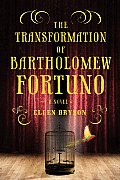
From my dad's Amazon wishlist I selected, The Transformation of Bartholomew Fortuno by Ellen Bryson.
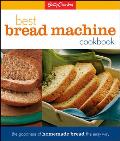
My mom received Betty Crocker's Best Bread Machine Cookbook to go along with her new bread maker (a gift from my dad). My mom is going to be doing a lot of experimenting with ingredient substitutions to I chose this book in particular because of a section it has on problem-solving, which is full of illustrations. Two other things in its favor: overwhelmingly good reviews and a structure that enables it to lie flat.

I got my sister a copy of The Hunger Games.
She wasn't particularly enthused, but I reminded her about how miffed she was with me when Twilight (the film) was released for not having previously informed her about the existence of the Twilight Saga.
Now, I legitimately thought she would refuse to read Twilight given its slow pacing and her general dislike of vampires and I don't even like the series (my ambivalence turned to hatred after Breaking Dawn).
Since The Hunger Games is coming out next year and I love Suzanne Collins' trilogy, I thought it would be irresponsible of me not to get her a copy of the book.

I received three books this year (all from Russell)
I really wasn't expecting books, but I have to say that I was tickled pink to get the two novels as they were among my most wanted books.

Sunday, November 13, 2011

phrase: sui generis

When reading I often find myself bemoaning the fact that I've never studied Latin.  The Latin phrase of the day is sui generis,1 which more or less means "in a class of its own." Apparently generis is the genitive case of genus (which we should all know from taxonomy) and sui means "self" or in this case "of him/her/itself."
  1. I came across this phrase in a discussion of Scottish author Alasdair Gray and his work.

Sunday, October 23, 2011

series (re)reading

Series reading and rereading has been a bit of a theme for me lately. I suppose that it's because in the wake of busyness and stress, I long for the comfort of the expected.

I'm loaning one of my new coworkers the Hunger Games Trilogy (I gave her book one yesterday after a harefooted read-through on Friday) so I'm on a binging on them in anticipation of not having ready access. Oh, how I love these books! I finished Catching Fire just now and am forcing myself not to jump right into Mockingjay
A Hunger Games movie is forthcoming, but I have no desire to see it. What I dislike most about film versions of books is how they manage to completely override our own images of how things, people, and places in the book look. That's not so much a problem with books like Pride and Prejudice that are constantly remade, but for others there's often only one film version and that version overshadows the originals.

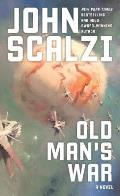
Last year I read Old Man's War by John Scalzi over the Thanksgiving holiday when I ran out of reading material. It's not a book that I'd normally pick up (see post), but my dad recommended it. I was pleasantly surprised by it and have subsequently picked up the follow-up books (again from my dad): The Ghost Brigades, The Last Colony, and Zoe's Tale.
I read The Ghost Brigades recently and will likely be tackling the other two books in short order.
I usually find science fiction to be somewhat inaccessible (it's a bit curious to me that science fiction films and television shows are so accessible when their written counterparts are so often not), which is why I tend to steer clear of it, but this series is really an exception. I recommend it for science fiction lovers as well as for people like me who don't normal read scifi.

I've been in a book spiral for the Percy Jackson and the Olympians books. What's a book spiral?, you ask. It's a way of circulating all the books in a series to a set of dispersed readers. Person A reads book 1 then sends it to B, who sends it to C, who send it to D, ..., who sends it back to A. While 1 is circulating, A reads book 2 and then starts to send it on its way. In this was all the books in the series are shared (one at a time) with each participant and then sent back to the originator. How long it takes to receive each book depends on the number of people before you in the queue, how quickly each reads, how far the books have to travel, and the efficiency of the postal service(s) involved.
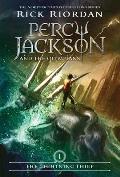
I read The Lightning Thief and The Sea of Monsters in December and The Titan's Curse in February. The Battle of the Labyrinth arrived this month.
I've really enjoyed this series. I like how Riordan incorporates Greek mythology (including many lesser known creatures) into his stories. One of the things I've appreciated most is how Riordan made things that are usually considered negative (dyslexia and ADHD) into indicators of superhuman gifts because I hope that kids who suffer for one or both of these things might feel a bit better about themselves after reading this series.

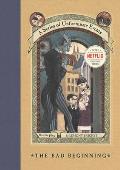
I had to admit that while I've collected all the books in Lemony Snicket's Series of Unfortunately Events series, I've never managed to read it all the way through (I even have The Tragic Treasury, but I forbid Russell to play in my presence because the songs are such earworms). I've read so many other books since the last time I picked up a Snicket title that I wanted to start from the beginning, The Bad Beginning. So far I've read that, The Reptile Room, The Wide Window, and The Miserable Mill. Four down, nine to go!
Friday, October 21, 2011

quick thoughts on some recent reads

Beauty Queens by Libba Bray

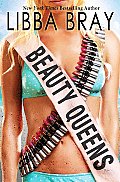
While Beauty Queens came highly recommended (lots of good blog reviews and a personal recommendation from friend Jessica), I can't say that I really enjoyed reading it. I liked the novel's snarky tone; how it played on pageants and pageant parents, reality TV, Lord of the Flies, and miscellaneous other stereotypes; and the diversity of the girls, their backgrounds, preferences, and points of view. As much as I appreciated all those things about Beauty Queens, I found the narrative irritating more than anything else. Beauty Queens was not a quick read for me because I didn't really want to keep reading it.
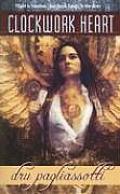
Clockwork Heart by Dru Pagliasotti

I really enjoyed Clockwork Heart. The world in which Pagliasotti sets the novel is quite intriguing - the extremely hierarchical society and how class divisions are marked, the icarus class and their role in the society, the ways in which the world is different than other steampunky settings. Clockwork Heart is a romance with a love triangle and a mystery that will keep readers guessing.
I will say that I found the romance element of the story much more successful than the mystery, which was overly complex for a book that isn't to going to have a sequel to continue building on the less immediate threat. As far as I know, Clockwork Heart is a stand-alone novel, but I'd love to read more set in this world.

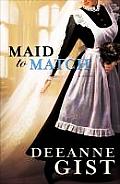
Maid to Match by Deeanne Gist

Historical romance set in Asheville, North Carolina circa 1899. Tillie is a senior parlormaid at Biltmore when she has a chance to become Mrs. Vanderbilt's ladies maid, position for which she's been groomed her entire life. Her priorities shift when Mack, twin of the undeniably handsome steward Earl, comes to live at Biltmore as a man of all work.
The protagonists of Maid to Match were a bit too righteous for my taste. While they each had some flaws, I didn't find them particularly believable. The author writes inspirational (Christian) romance, which accounts for the strict moral alignment of her characters.

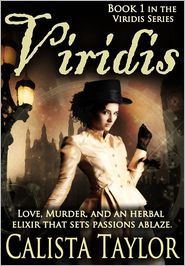
Viridis by Calista Taylor

I hadn't heard of Viridis before it was mentioned in the steampunk reads discussion group on GoodReads. It was available as a free Nook-book (also free on Amazon for Kindle), so I figured that it couldn't hurt to download it.
Viridis is a steampunk romantic suspense novel and the first in a planned series. I enjoyed it. Good world-building that doesn't overshadow the storyline, interesting characters, romance, and mystery, but there was one glaring narrative inconsistency that's quite hard to overlook.
There's one part of the story that some readers may have trouble with and need to skim through.

Thursday, October 13, 2011

Steampunk! out this week

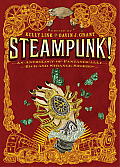
Steampunk! An Anthology of Fantastically Rich and Strange Stories
edited by Kelly Link and Gavin Grant


I posted about Steampunk! back in June, but the anthology is out this week so it seems like the perfect time for another post.

There's a great review written by Steampunk Scholar up on one of the Tor.com blogs.

My favorite stories in the book were "Clockwork Fagin" by Cory Doctorow, "Everything Amiable and Obliging" by Holly Black, "Finishing School" (comic) by Kathleen Jennings, "The Last Ride of the Glory Girls" by Libba Bray, "The Oracle Engine" by M. T. Anderson, "Steam Girl" by Dylan Horrocks, and "The Summer People" by Kelly Link.

Sunday, October 02, 2011

on into October

I should begin this post by explaining why I haven't been posting regularly. The short answer is that I've been busy and tired. Starting a new job1 is exhausting and I have to admit that I've worn myself out trying to post as regularly as I think I should. As you can tell from my sidebar, I have been reading, I just haven't been posting about all the books that I've read. I do intend to post on many of the unreviewed books, but it'll take me some time to get to all the ones on my list.

October is going to be the craziest month of the year for me for the foreseeable future. My new employer runs lots of special events in October. And when I say "lots," I mean lots: the biggest event runs on 21 nights in October and there are three other every-weekend events. I didn't work this weekend, but I'm on special-event duty every other weekend this month (next weekend, I'm working Saturday, Sunday, and Columbus Day). So, don't expect a lot of posts in October. I suspect that I'll be falling asleep over books more often than not.

I've also been neglecting a writing project so I will be intentionally limiting my time spent on the blog for a few months after October. I'll still be posting, just not as much, because I desperately need to focus on this other project.

Just wanted to let you all know what's going on...
  1. These past six months have flown by, but I'm still very much learning the lay of the land and figuring out how to best navigate these new waters