Saturday, July 28, 2012

Sync this week: Pinned and Locomotion

Sync's offerings this week (Thursday, July 26 through Wednesday August 1, 2012) are:


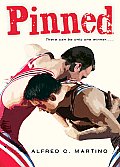
Pinned by Alfred C. Martino and
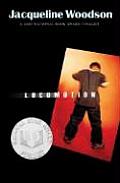
Locomotion by Jacqueline Woodson


In this gripping story, wrestling dominates the lives of two young men. Ivan Korske and Bobby Zane come from very different backgrounds--yet they both have the drive, determination, and commitment of a champion. And both are determined to have successful wrestling seasons despite having to grapple with their own demons.
But their personal problems won't matter when these two teens meet on the mat to compete for the title of New Jersey State Wrestling Champion. Both Ivan and Bobby have put in grueling hours of practice, endured intense hunger to cut weight, and sacrificed themselves for the sport they love--but only one of them is destined to win.


Each kindness makes the world a little better.
Chloe and her friends won't play with the new girl, Maya. Maya is different--she wears hand-me-downs and plays with old-fashioned toys. Every time Maya tries to join Chloe and her gang, they reject her. Eventually, Maya plays alone, and then stops coming to school altogether. When Chloe's teacher gives a lesson about how even small acts of kindness can change the world, Chloe is stung by the lost opportunity for friendship, and thinks about how much better it could have been if she'd shown a little kindness toward Maya.
This unforgettable book is written and illustrated by the award-winning team that created The Other Side and the Caldecott Honor winner Coming On Home Soon. With its powerful message and striking art, it will resonate with readers long after they've put it down.


Go here to get this week's downloads.

Note: these books don't expire like the e-audiobooks you get from the library. So, be sure to download the books even if you don't think you'll get around to listening to them right away.

More information about Sync is available in this post.

Wednesday, July 25, 2012

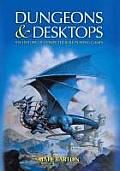
Dungeons & Desktops by Matt Barton

Dungeons and Desktops: The History of Computer Role-Playing Games
by Matt Barton


I haven't read Dungeons and Desktops, but it comes recommended by Russell, who has it checked out of our public library.  He's already foisted the book off on my gamer father.

As is painfully obvious from its subtitle, Dungeons and Desktops explores the history of the CPRG genre. Lest other gamers feel left out, the book does discuss console games and MMOs and how they are related to CPRGs.

Barton is an English professor by trade and Russell reports that Dungeons and Desktops is well-written, easy, engaging read. In addition to being informative, the book brought back lots of good memories of playing the games it discusses. He also appreciated that Barton fills out the story of the games, describing how the games were designed and who designed them.
Holy acronyms, Batman! (and lots more in the book)
CRPG: computer role-playing game.
MMO: massively multiplayer online [game].

Monday, July 23, 2012

quotable Ursula Le Guin

I've had this quote up on my sidebar for a little while now, but since I know many people (such as myself) click through from their blog readers only irregularly, I'm sharing it in its own post. It's too good not to share. From her February 2008 Harper's Magazine article, "Staying Awake: Notes on the alleged decline of reading" -
The book itself is a curious artifact, not showy in its technology but complex and extremely efficient: a really neat little device, compact, often very pleasant to look at and handle, that can last decades, even centuries. It doesn’t have to be plugged in, activated, or performed by a machine; all it needs is light, a human eye, and a human mind. It is not one of a kind, and it is not ephemeral. It lasts. It is reliable. If a book told you something when you were fifteen, it will tell it to you again when you’re fifty, though you may understand it so differently that it seems you’re reading a whole new book.
– Ursula Le Guin

Saturday, July 21, 2012

Sync this week: Cleopatra's Moon and Antony & Cleopatra

Sync's offerings this week (Thursday, July 19 through Wednesday, July 25, 2012) are:


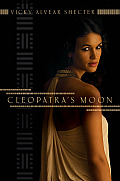
Cleopatra's Moon by Vicky Shecter
and
Shakespeare's Antony and Cleopatra


The Luxe meets the ancient world in the extraordinary story of Cleopatra's daughter.
Selene has grown up in a palace on the Nile with her parents, Cleopatra and Mark Antony--the most brilliant, powerful rulers on earth. But the jealous Roman Emperor Octavianus wants Egypt for himself, and when war finally comes, Selene faces the loss of all she's ever loved. Forced to build a new life in Octavianus's household in Rome, she finds herself torn between two young men and two possible destinies--until she reaches out to claim her own.
This stunning novel brings to life the personalities and passions of one of the greatest dramas in history, and offers a wonderful new heroine in Selene.


The twin empires of Egypt and Rome mingle and clash in this towering tragedy. Impulsiveness, passion, mistaken identity and dark humor all color the fascinating dalliance between Antony and Cleopatra, the larger-than-life pair at the center of this play.
A BBC Radio 3 full cast production.


Go here to get this week's downloads.

Note: these books don't expire like the e-audiobooks you get from the library. So, be sure to download the books even if you don't think you'll get around to listening to them right away.

More information about Sync is available in this post.

Thursday, July 19, 2012

steampunk style

Steampunk has gotten quite a bit of attention on the blog (see posts), but the focus has always been on the fiction. While steampunk is at heart a literary subgenre,1 for many it is first and foremost a design aesthetic. And one of the things steampunk aficionados like to do most is dress up to attend steampunk-themed events.

Items characteristic of steampunk fashion are under-bust corsets and goggles adorned with decorative metal elements. Individuals beginning to craft costumes are often admonished to begin with a items that are historically accurate to the period and then add shiny and creative details. Steampunk costumes often require a trips to both the local thrift and hardware stores before they are complete.

When I think of steampunk style, the word that often comes to mind is a made-up one, reproaesthetical. In Megan McCafferty's Bumped, reproaesthetical is a slang term meaning "having good genes" or "worthy of breeding with".  Obviously, that's not what I mean, but if one imagines the combination relying on historical reproduction (or the use of replicas) rather than sexual, my use of reproaesthetical likely begins to make more sense.

Steampunk style is a riff on historical style.  Historical reproductions (and authentic period items) can serve as a foundation, becoming steampunk with the addition of anachronistic decorative elements.  They can also inspire something completely new as illustrated by the images below (click on them for a bigger version of the images).
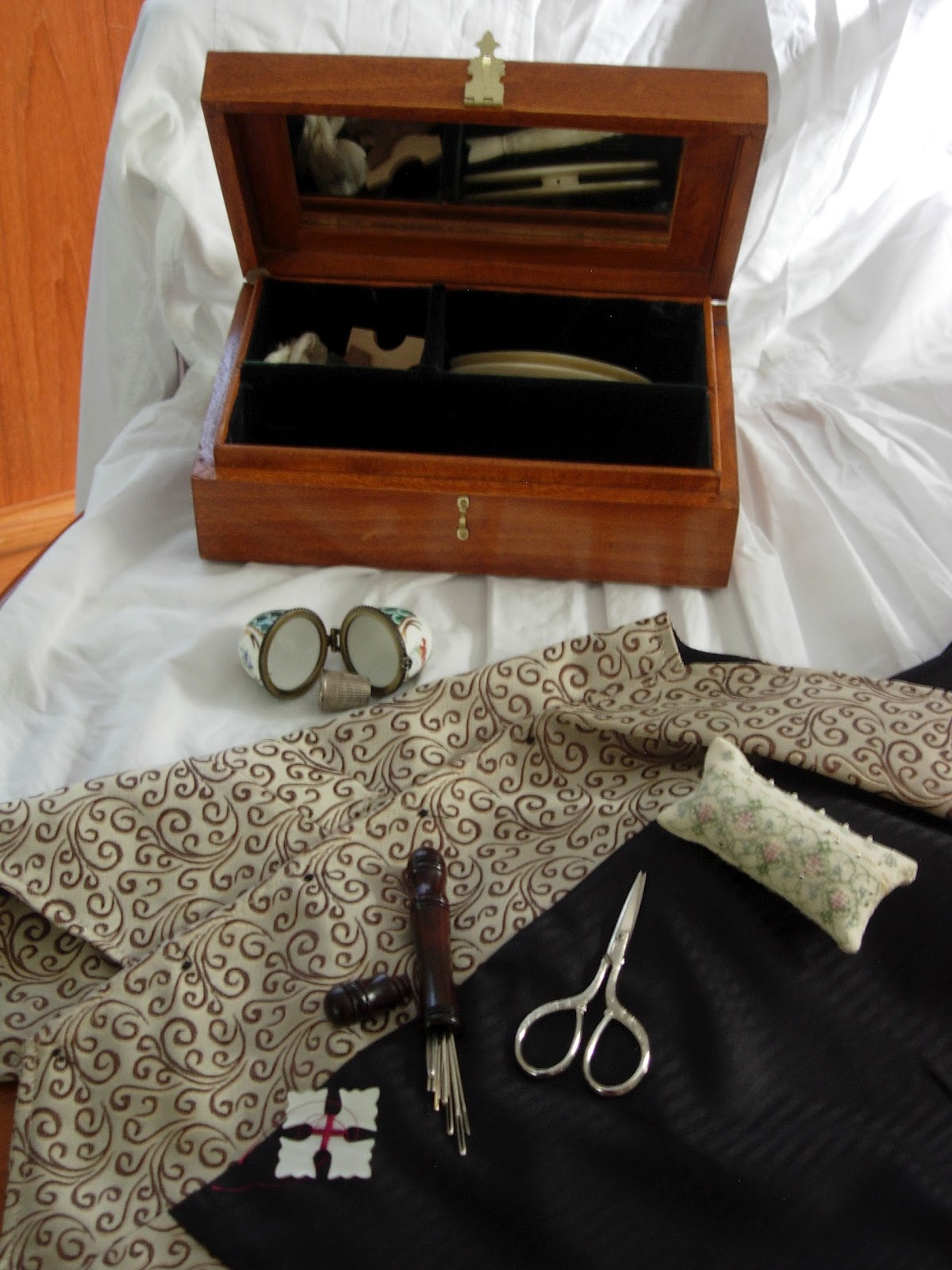
A friend's reproduction Victorian sewing box and tools

First, we have a portable 19th century sewing kit. Vintage implements (a delicately hand stitched pin cushion, threads both in the skeins and on thread winders, a silver-covered steel thimble in porcelain case, a pair of sharp metal scissors, and a variety of fancy needle cases made of bone and wood) are contained within a varnished wood case that is padded to protect its more fragile contents and set with a mirror that was used to reflect light onto stitchwork--an important feature in the perpetually dark, candle- or gas-lit world of the nineteenth-century.

Steampunk bracer constructed by R.H Mardigan Enterprises


The above is a streamlined steampunk version of the same tools. A workaday wooden needle case, brass thimble, miniature pincushion,2 fancy brass scissors, and wooden spools of thread are mounted on a leather wrist guard. This "Tailor’s Assistant" is a compact solution that utilizes the "latest" Victorian technology (wooden spools were first introduced in the 1840s) to make a forearm-mounted sewing kit both stylish and practical.
  1. Historical science fiction set often (though not exclusively) in Victorian London.
  2. The tomato-shaped pincushion dates to the Victorian era when tomatoes were placed on the mantle of a new home to guarantee prosperity. Tomato stand-ins (red-fabric stuffed with wool or sawdust) were needed when the fruit was out of season. While tomatoes would be discarded when they started to spoil, the fabric substitutes were retained and put to use for pin storage. (Why are pincushions frequently made to resemble tomatoes?)

Sunday, July 15, 2012

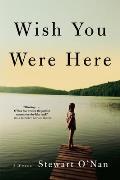
Wish You Were Here by Stewart O'Nan

Wish You Were Here by Stewart O'Nan

After her husband Henry dies, Emily Maxwell decides to sell their vacation home on Lake Chautauqua. Wish You Were Here recounts the last week that the family (Emily, her two children and their families, and Henry's sister Arlene) spends at the cottage.

While the action of the 500+ page novel takes place only over the course of eight days, it never feels unbearably long because the story is told (by the third person omniscient narrator) in turns from ten different perspectives (one chapter is given over to the dog, but the rest cycle through the three generations of vacationers). This allows the author to delve deep into an ordinary family (and the characters do feel both ordinary and real), exploring the strengths and weaknesses of each member and of the family as a whole. I most appreciated being able to see the differences between individual characters' self-perception and how they are viewed by those closest to them.

I do wish that I read Wish You Were Here when I still lived in Buffalo. I would love to drive around Chautauqua now, trying to pick out all the landmarks featured in the novel.

Some passages that struck me while I was reading -

Ken (Emily's son): "He feared, in the future, some crippling repercussions from these early indulgences, and thought that was due to his own childhood being for the most part idyllic, the hard facts of life reaching him only in his mid-twenties, as if until then he'd been swathed in a cocoon of his parents' making, composed of equal parts love and money" (27).

Meg (Emily's daughter): "Just waking up made her tired, her brain incredibly heavy, a cloud filled with rain" (58).

Lise (Emily's daughter-in-law):" She wondered what her life would look like in a book. Now there was a depressing idea" (477).

Saturday, July 14, 2012

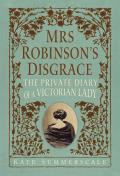
Mrs. Robinson's Disgrace
by Kate Summerscale

Mrs. Robinson's Disgrace: The Private Diary of a Victorian Lady
by Kate Summerscale


Until the introduction of the Matrimonial Causes Act in 1857, divorce was a privilege granted only to England's elite requiring as it did a private act of Parliament. In 1958 the newly created Court of Divorce and Matrimonial Causes began to grant divorces to couples where adultery (in the case of the wife) or multiple "matrimonial offences" (in the case of the husband) could be verified.

In Mrs. Robinson's Disgrace Summerscale turns her lens to one of the most titillating of the court's early divorce proceedings, the suit of Henry Oliver Robinson against his wife Isabella (and one Dr. Edward Lane) on the grounds of adultery, which began on Monday, June 14, 1858. The chief piece of evidence in the case was Isabella's diary, long passages of which were read during the trial and excerpted in the press to the scandalized public's great delight.

Though the press no doubt loved the fodder provided by the spate of divorce proceedings, it was not necessarily in favor of the new court and the relative ease with which couples were receiving divorces. The Saturday Review insisted that,
in the interests of the greatest happiness of the many, [...] a judicial separation should be granted only in the "gravest emergency": "a married couple should endure a very considerable amount of discomfort, incompatibility, personal suffering, and distress, and yet should continue to live together as man and wife." (217)
Women were expected the bear the brunt of that personal suffering. A custody battle decided in 1858 by the Court of Chancery yielded this insightful comment from Vice-Chancellor Kindersley:
I believe it is the common case that very few wives do consider sufficiently their solemn obligation of obedience and submission to their husbands' wishes, even though they be capricious. However harsh, however cruel the husband may be, it does not justify the wife's want of that due submission to the husband, which is her duty both by the law of God and by the law of man. (196)
These quotes1 really do show how much times have changed.

Fascinated as I am by Victorian social mores, I was intrigued by the premise of Mrs. Robinson's Disgrace and was thoroughly engrossed while reading it. I heartily recommend it to people interested in the Victorian period, gender studies, legal history, social change, and even archives. While I think that some lovers of historic fiction may enjoy Mrs. Robinson's Disgrace, I'm sure others will dislike it simply because it doesn't read like a novel.

Isabella Robinson was trapped in a loveless marriage to a man whose work often took him away from the home for long periods of time.  Profoundly unhappy, she channeled all her energy into remaining composed in front of company, expressing her true feelings and desires only to her diary.

Mrs. Robinson's Disgrace is not a simple presentation of Isabella's story as told in her diary (1850-1855). Summerscale uses the diary, the Robinson divorce suit, and the public reaction to each to give a fuller picture of Isabella's life and the world in which she lived. Of course, that's not to say that there is a dearth of juicy, adulturous thought and action, whether real or imagined.
  1. And this one, which I couldn't bear to leave out, considering the fact that this blog is facilitating the "culpable neglect" of my "most important [wifely] duties":
    She who is faithfully employed in discharging the various duties of a wife and daughter, a mother and friend," according to Thomas Broadhurst's popular manual Advice to Young Ladies on the Improvement of the Mind and Conduct of Life (1810), "is far more usefully occupied than one who, to the culpable neglect of the most important obligations, is daily absorbed by philosophic and literary speculations, or soaring aloft amidst the enchanted regions of fiction and romance. (82-83)
disclosure: I received a review copy of Mrs. Robinson's Disgrace from Bloomsbury via NetGalley.

Friday, July 13, 2012

Sync this week: short stories

I'm not particularly excited about the Sync offerings this week, but I do want to get back into doing this these reminder posts.

Sync's offerings this week (Thursday, July 12 through Wednesday, July 18, 2012) are:

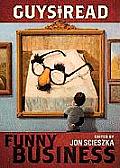
Guys Read: Funny Business, edited by Jon Scieszka


Here it is! Volume 1 [of the Guys Read Library of Great Reading]. A lot of something funny for everyone. 10 original short stories by Mac Barnett, Eoin Colfer, Christopher Paul Curtis, Kate DiCamillo & Jon Scieszka, Paul Feig, Jack Gantos, Jeff Kinney, David Lubar, Adam Rex, and David Yoo.
You should be able to find something you like in here. This volume is guaranteed to contain an intro joke, a sneaky friend, a super-villian, an origin story, an idiot friend, a cranky author, a homicidal turkey, brother torture, a crazy grandpa, parents who give their kid's bedroom to a biker, self surgery using rusty pliers, and lots of laughs.


"The Celebrated Jumping Frog of Calaveras County" is a wild yarn involving a case of mistaken identity, a gambler who’d bet on anything, and a very unusual frog named Daniel Webster. First published in The Saturday Press in 1865, the tale was immensely popular, and in 1867 an expanded version was published with 26 additional short stories, told as only Mark Twain could tell them.

Note: these books don't expire like the e-audiobooks you get from the library. So, be sure to download the books even if you don't think you'll get around to listening to them right away.

More information about Sync is available in this post.

Tuesday, July 10, 2012

the best thing about summer

Summer is without question my least favorite season, mostly because I hate the weather. I don't hold up well in heat and humidity.

There's one thing I do like about summer though--
Sync, a program that provides free YA-appropriate audiobooks all summer
--and I was horrified to realize that I'd missed the first few week's of this year's program.
So, this is a belated public service announcement.

The Sync-week is Thursday-Wednesday so be sure to download this week's titles (Anna Dressed in Blood and The Woman in White) today or tomorrow.

Another important note, not mentioned below,1 is that these books don't expire like the e-audiobooks you get from the library. So, be sure to check in each week to download the books even if you don't think you'll get around to reading them right away.

Sync YA literature into your earphones with
two free audiobook downloads each week
June 14 - August 22, 2012


Teens and other readers of young adult literature will have the opportunity to listen to bestselling titles and required reading classics this summer. Each week from June 14 to August 22, 2012, Sync will offer two free audiobook downloads.

The audiobook pairings will include a popular YA title and a classic that connects with the YA title's theme and is likely to show up on a student's summer reading lists.  For example, Laini Taylor's Daughter of Smoke and Bone, the first book in a new series about a girl who opens a door to two otherworldly cities at war,2 will be paired with Charles Dicken's A Tale of Two Cities.

SYNC Schedule:


July 5 – July 11, 2012
- Anna Dressed in Blood by Kendare Blake, Read by August Ross (AudioGO)
- The Woman in White by Wilkie Collins, Read by Ian Holm (AudioGO)

July 12 – July 18, 2012
- Guys Read: Funny Business by Jon Scieszka [Ed.] et al., Read by Michael Boatman, Kate DiCamillo, John Keating, Jon Scieszka, Bronson Pinchot (Harper Audio)
- The Notorious Jumping Frog of Calaveras County and Other Stories by Mark Twain, Read by Norman Dietz (Recorded Books)

July 19 – July 25, 2012
- Cleopatra’s Moon by Vicky Alvear Shecter, Read by Kirsten Potter (Oasis Audio)
- Antony and Cleopatra by William Shakespeare, Read by a Full Cast (AudioGO)

July 26 – August 1, 2012
- Pinned by Alfred C. Martino, Read by Mark Shanahan (Listen & Live Audio)
- Locomotion by Jacqueline Woodson (Brilliance Audio)

August 2 – August 8, 2012
- Daughter of Smoke and Bone by Laini Taylor, Read by Khristine Hvam (Hachette Audio)2
- A Tale of Two Cities by Charles Dickens, Read by Simon Prebble (Blackstone Audio)

August 9 – August 15, 2012
- Skulduggery Pleasant by Derek Landy, Read by Rupert Degas (Harper Audio)
- Dead Men Kill by L. Ron Hubbard, Read by Jennifer Aspen and a Full Cast (Galaxy Press)

August 16 – August 22, 2012
- The Whale Rider by Witi Ihimaera, Read by Jay Laga’aia (Bolinda Audio)
- The Call of the Wild by Jack London, Read by William Roberts (Naxos AudioBooks)


And, just for documentary purposes - titles from previous weeks

June 14 – June 20, 2012
- The Eleventh Plague by Jeff Hirsch, Read by Dan Bittner (Scholastic Audiobooks)
- The Grapes of Wrath by John Steinbeck, Frank Galati [Adapt.], Read by Shirley Knight, Jeffrey Donovan, and a Full Cast (L.A. Theatre Works)

June 21 – June 27, 2012
- Irises by Francisco X. Stork, Read by Carrington MacDuffie (Listening Library)
- Sense and Sensibility by Jane Austen, Read by Wanda McCaddon (Tantor Media)

June 28 – July 4, 2012
- The Amulet of Samarkand by Jonathan Stroud, Read by Simon Jones (Listening Library)
- Tales from the Arabian Nights by Andrew Lang, Read by Toby Stephens (Naxos AudioBooks)

More information about Sync is available on the Sync website
  1. An ever so slightly modified version of their press release
  2. I really enjoyed Daughter of Smoke and Bone, which I read recently. See my post about it.

Monday, July 09, 2012

Emily Dickinson, 254

It's been a few months since National Poetry Month (see posts) and this blog is in need of a bit of verse. Yesterday, while watching reruns of Criminal Minds,1 I was reminded of this gem.

Emily Dickinson, Untitled Poem 254:
Hope is the thing with feathers
That perches in the soul,
And sings the tune--without the words,
And never stops at all,

And sweetest in the gale is heard;
And sore must be the storm
That could abash the little bird
That kept so many warm.

I've heard it in the chillest land,
And on the strangest sea;
Yet, never, in extremity,
It asked a crumb of me.
Read more Dickinson:
The Complete Poems of Emily Dickinson, edited by Thomas H. Johnson.
  1. One of the quotations featured in Mosley Lane (season 5) was the first stanza of this poem.

Sunday, July 08, 2012

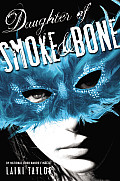
Daughter of Smoke and Bone
by Laini Taylor

Daughter of Smoke and Bone by Laini Taylor
Read by Khristine Hvam
Series: Daughter of Smoke and Bone (trilogy), Book 1
Karou leads two lives. One is in the tangled streets of Prague, as an orphan and art student; the other in a clandestine workshop, overflowing with jars of teeth and wishes, run by the ram-horned magician, Brimstone—the closest thing to family Karou has ever known. She doesn't know where she came from, but she's about to find out. When Karou meets stunning, haunted Akiva, she finds a love whose roots drink deep of a violent past, and an ancient war that is far from over. Master storyteller Laini Taylor imagines a wholly unique fantasy about a forbidden love, an epic battle, and hope for a world remade.
The above is the synopsis that my library system provides for Daughter of Smoke and Bone in its digital media catalog (ie. the site I go to for e-books and e-audiobooks). I was in need of a new audiobook (and I'm endlessly fascinated by Prague) so I decided to check Daughter of Smoke and Bone out even though I wasn't sure I'd enjoy it as I often lose patience with high fantasy.

It did take me a little while to get into Daughter of Smoke and Bone and its story, but I never got overwhelmed by or irritated with the world Taylor created even though it includes seraphim and I usually have no patience with angel novels. Daughter of Smoke and Bone takes place primarily in the world as we know it today, though a series of portals provide access to a shop, manned by a group of chimaera,1 that seems to exist as part of a mysterious parallel world.

The novel's protagonist, Karou, is an usually-skilled, blue-haired teen, who was literally raised by monsters.  Karou's foster-father, the mysterious Brimstone (whose features read as human, lion, and ram, among other things) is the proprietor of the not-of-this-world shop.  Brimstone sells wishes and buys teeth.  Karou's job is to act as his agent in the human world.  In addition to meeting Brimstone's regular suppliers who are unable or unwilling to visit the shop, Karou travels all over the world to procure particularly rare specimens.  When she's not running errands for Brimstone, Karou attends art school in Prague where she leads an only somewhat extraordinary life.

While Karou has a love-interest in Akiva, their relationship is not your typical young adult-novel romance. Karou and Akiva's relationship is exceedingly complicated as a result of complex external factors, not because of a love triangle or teenage angst. Their relationship is a significant part of Daughter of Smoke and Bone (and likely the entire trilogy), but the romance's role is to reveal the larger picture and serve as a catalyst for Karou to discover who she really is.

Even though Daughter of Smoke and Bone is the first in a trilogy, set-up and world-building don't overwhelm the narrative. The world Taylor has imagined is complex and well-constructed. The plot of Daughter of Smoke and Bone and the overarching, series-wide storyarch are well-balanced within the novel, and, while the novel's ending leaves readers wanting more (in the way of a sequel), there is sufficient resolution for them not to feel completely untethered.

In any case, I really enjoyed Daughter of Smoke and Bone. I highly recommend the audio version. Khristine Hvam does a wonderful job narrating it.

Days of Blood and Starlight, the sequel to Daughter of Smoke and Bone, will be released in early November.
  1. chimaera / chimera:   a monstrous creature composed of several different animals.  Also, per OED, an unreal creature of the imagination, a mere fancy; an un-found conception.
    The origins of the word lie in Greek mythology.  The creature chimera--a fire-breathing goat-lion-snake hybrid from Lycia--is referenced in the Iliad among other places.

Sunday, July 01, 2012

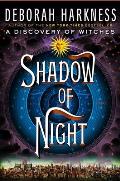
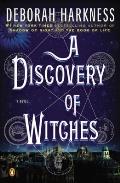
Deborah Harkness' All Souls Trilogy


The All Souls Trilogy follows the story of Diana Bishop, a historian and reluctant witch, as she solves the mystery of Ashmole 782,1 falls in love with a mysterious vampire named Matthew Clairmont, and learns how powerful it can be to accept who you are. - author website
Shortly after reading A Discovery of Witches, the first book in Deborah Harkness' All Souls Trilogy, I read this post on the Perfume Posse blog. The post mentioned scenting the series' main characters as part of the promotion of Shadow of the Night, the trilogy's second title, which will be released on July 10. I'm not familiar with either of the perfumes selected,2 but I love the fact that the author and publisher were on board with the character-scenting project. Harkness is very detailed about how things and people smell/taste throughout A Discovery of Witches between the vampires and their heightened senses and the female protagonist learning about wine tasting so this character-scenting is an ideal fit for the series.

I have to admit that I was sure that I was done with the All Souls Trilogy after I finished A Discovery of Witches.3 I liked the premise of the novel4 and the world Harkness imagined, but was underwhelmed by the execution. I found A Discovery of Witches overlong at nearly 600 pages (it's not a standalone title after all). The narrative was often bogged down by too much detail: detail about insignificant things, which would have been less irritating if important aspects of the story like the mechanics of the supernatural elements were not left unclear or completely muddled. I wished Harkness had worked with a more ruthless editor.

I am happy that I decided to read Shadow of the Night after all because Shadow of the Night is a much better book than A Discovery of Witches. There's a time-travel element that makes Shadow of the Night feel a bit Outlander-ish. The way magic works and the relationships between the various metahuman5 groups become more clear. The novel does not stand alone because readers really do need quite a bit background information to understand it, but Shadow of the Night's plot is a nice novel-sized package. It is blessedly more focused and the occasional narrative jump to secondary characters not involved with the action of Shadow of the Night is surprisingly well done and adds to the story arch rather than distracting from it.

My biggest complaint about Shadow of the Night is that I would have preferred less in the way of important-historical-personages-as-significant-secondary-characters. A Discovery of Witches suffered from an excess of name-dropping,6 but Shadow of the Night takes it to a whole other level.

In short, I enjoyed Shadow of the Night, but I don't want to recommend it wholeheartedly since reading A Discovery of Witches is a prerequisite for understanding Shadow of the Night.
  1. A alchemical manuscript referred to by its catalog number.
  2. Etro Messe de Minuit for Matthew and Ginestet Botrytis for Diana.
  3. As much as I like to claim otherwise, I'm still not all that good at giving up on books that I'm not enjoying.
  4. Not the romance, mind you. I'm not terribly keen on the otherwise-perfectly-capable heroine falling for/needing to rely upon the overprotective-to-the-point-of-violence hero. I would have giving put up with the romance for the overarching storyline.
  5. I'm not sure metahuman is the right word, but it's the one I'm going with right now. The groups I'm referring to are witches, vampires, and daemons.
  6. Of course our 1500-year-old vampire had met practically every famous figure in recorded history.
disclosure: I received a review copy of Shadow of the Night from Penguin via NetGalley. I got A Discovery of Witches from the library.

Wednesday, June 20, 2012

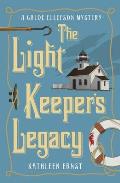
The Light Keeper's Legacy
by Kathleen Ernst

The Light Keeper's Legacy by Kathleen Ernst
Series: Chloe Ellefson Mysteries, book 3

Chloe Ellefson, curator of collections for Old World Wisconsin, is hoping for a respite from her overcomplicated work and personal life when she accepts a week-long consulting gig at another Wisconsin historic site.  Rock Island State Park's rustic charm is just the thing Chloe needs to unwind.  But, when she discovers a dead body on her first night on the island, it's clear that Chloe has more to worry about than just preparing a furnishing plan for the site's historic lighthouse.
The Light Keeper's Legacy is a pretty standard cozy mystery, plot wise. Chloe is an interesting character and not just because she's a museum professional. She has some weird sixth sense, a "gift of perception," that guides her in both her museum interpretation and in her sleuthing (though I will say that I wasn't all that keen on this part of her character, except in one very specific case, which I can't explain without including spoilers). Beyond that, Chloe has also got what seems to be a complex backstory that keeps her from being completely sure of herself.

The best part of The Light Keeper's Legacy was Ernst's use of the split narrative. I enjoyed the juxtaposition between Chloe's 1980s and time period she's trying to research (mid-late 19th century). I found the historical sections and the historical characters to be some of the most compelling parts of the novel.

The Light Keeper's Legacy is the third book in Kathleen Ernst's Chloe Ellefson Mysteries (after Old World Murder and The Heirloom Murders). I liked The Light Keeper's Legacy enough that I got Old World Murder from the library.

The Light Keeper's Legacy will be released in October 2012.
disclosure: I received a review copy of The Light Keeper's Legacy from Midnight Ink Books via NetGalley.

Tuesday, June 19, 2012

public service announcement:
get a YA story from Jen Lancaster

Earlier today Jen Lancaster posted a request on her blog. She wants to test the commonly held belief that "social media mentions are tantamount to success" for authors. She's offering a free copy of her never-before-seen (young adult) short story, "The Girl Most Likely," to anyone who talks about her and her work on social media during the next week. And, you don't even need to say nice things. See this post on her blog for full details.

In any case, I like Jen Lancaster (she shares my affection for footnotes) so I have no problem going along with her experiment and I'm interested to hear the results (she's promised to report back). In any case, if you're interested in learning more about her work, I've posted abut Bitter is the New Black (see post) and Such a Pretty Fat (see post). Her blog is also good reading. If you're intrigued, you can post somewhere and earn a copy of "The Girl Most Likely." If not, it's no skin off anyone's back.

Saturday, June 02, 2012

more quick thoughts on more recent reads

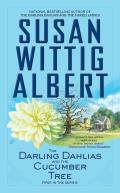
The Darling Dahlias and the Cucumber Tree
by Susan Wittig Albert


Crime-solving highjinks set against the backdrop of Depression-era south.

The first in a series of cozy mysteries set in the early 1930s. The sleuths are members of Darling, Alabama's garden club. The Darling Dahlias and the Cucumber Tree features murder, bank fraud, a prison break, a haunting, twelve garden club ladies, and two cucumber trees. That's quite a bit to pack into one novel, but Albert juggles everything admirably. I enjoyed The Darling Dahlias and the Cucumber Tree and would be interested in continuing on with the series.

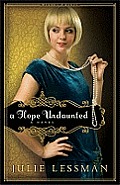
A Hope Undaunted by Julie Lessman

Never judge a book by its cover.

If I had realized that A Hope Undaunted was an inspirational romance (i.e. Christian romantic fiction) I would not have checked it out. I did read it the entire novel because I needed to find out whether the feisty young women's rights advocate would be convinced of the importance of unquestioningly obeying her father and (future) husband. I found it overbearing.

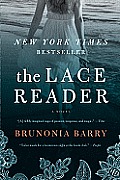
The Lace Reader by Brunonia Barry

Self-published novel turned NY Times bestseller.

Set primarily in Salem, Massachusetts, and its environs, The Lace Reader examines Salem's legacy in an interesting way at a time when witchcraft good PR not a crime. Its unreliable narrator is a professed liar, but it is unclear just how much of her story is fiction for the majority of the novel. Compelling reading.

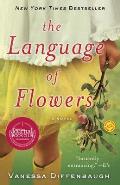
The Language of Flowers by Vanessa Diffenbaugh

A contemporary fictional meditation on the Victorian language of flowers.

I've been intrigued with the language of flowers since I first learned about it years ago. The problem with floriography is that the meanings of the flowers vary from source to source and the sentiments attributed to a particular bloom can be contradictory. One of the things that I liked most about Diffenbaugh's novel, The Language of Flowers, was the author's inclusion as an addendum of the floriography dictionary developed by her protagonist (and another character) during the course of the novel. The novel itself wasn't quite what I expected it (oh how the protagonist drove me to distraction at times with her inability to trust), but I appreciated it nonetheless.

Sunday, May 13, 2012

quick comments on recent reads

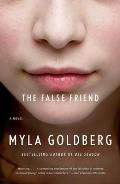
The False Friend by Myla Goldberg

Lured by The False Friend's synopsis, I expected the novel to be something that it's not. It is short, spare, and well-written. The novel deals with childhood bullying, the unreliable nature of memory, and how difficult it is to know those closest to us. Its revelations are myriad, but they come from unexpected quarters. I have to admit that I found The False Friend unsatisfying. I found the protagonist increasingly unsympathetic and the ending unsatisfying (even though I understand why Goldberg ended the novel the way that she did).

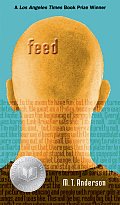
Feed by M.T. Anderson

Set in a dystopian future where the internet is hardwired to everyone's brain. Anderson incorporates interruptions by targeted advertizing into the narrative to help readers understand the experience of being plugged into the feed. If I had been reading Feed, I would have skipped over those sections, limiting the annoyance factor, but I listened to the audio version, which forced me to fully experience these tics in the narrative. Feed is a cautionary tale, much darker than a lot of the books that have been pushed out during this craze for dystopian (young adult) fiction.

Miss New India by Bharati Mukherjee

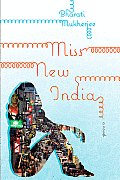
A bildungsroman that explores the theme of "the New India" (a descriptor I find a bit perplexing). Anjali (Angie) Bose runs away from home and an arranged marriage assisted by an expatriate American teacher who believes in her potential for a better life than small town Gauripur can offer her. Angie travels to Bangalore where she muddles along, though a series of increasingly unbelievable amount of plot twists, almost in spite of herself. The highlight of Miss New India is its cast of secondary characters.

Moonstone and Moon Rise by Marilee Brothers

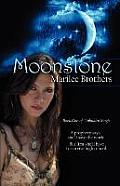
I only read the first two installments of Marilee Brothers' Unbidden Magic series even though I had a review set of all four titles (Moonstone, Moon Rise, Moon Spun, and Shadow Moon). I found Moonstone to be a somewhat standard teen paranormal romance: nothing to write home about, but interesting enough to continue with the series considering the fact that I already had the next book at hand. Moon Rise, however, opens with a serious series fiction infraction: the love interest from book one (who, I might add, was a more interesting character than the protagonist herself) is inexplicably missing in action allowing both author and protagonist to cultivate a new love interest more in line with the second installment's storyline. I hate when authors do this: throwing out all the work they did getting their readers invested in a relationship. I finished Moon Rise--which, I should add in Brothers' defense, does end with a teeny bit of explanation about the absence of Moonstone's love interest--but I had no desire to continue on with the series.

Perfume: The Story of Murderer by Patrick Sueskind
translated from the German by John E. Woods


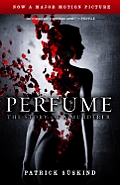
I've been meaning to read Perfume for ages. It was first published in 1985 and I've had a copy on my bookshelf for at least four years. An olfactory-genius serial killer in 18th century France. The pacing is slow (sometimes excruciatingly so), but the language (particularly Suskind's ability to put smells into words) is wonderful.  What I found most interesting  were the descriptions of craft of perfumerie: the process for making absolutes and the like.
disclosure: I received a review copy of Moonstone and Moon Rise from Bell Bridge Books via NetGalley.

Thursday, May 03, 2012

Code Name Verity by Elizabeth Wein

Code Name Verity by Elizabeth Wein

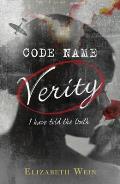
Code Name Verity will be released a bit later this month. I've just finished reading a review copy and I adored it. I'm putting a hard copy on my wishlist and I'll be buying copies to give as gifts. Such a good book.

I don't want to spoil the plot so I won't say much about it. Code Name Verity is a work of historical fiction. The action occurs primarily in Nazi-occupied France. One protagonist is a pilot. The other begins the novel imprisoned in a hotel that had been converted into a Gestapo headquarters.

Don't be put off by the novel's slow start. While Code Name Verity is by no means a quick read, the pace quickens and the story becomes increasingly engaging until the reader is so invested in the characters that she simply must find out what happens to them. Code Name Verity is not always easy to read, but that's because horrible things happen during wartime.

With two teenage protagonists, Code Name Verity is being marketed as a young-adult novel, but there is much to recommend it to a wider audience. Strong female characters, an effective split narrative, action and adventure, double-agents and double entendres, and moments of shock and awe, topped off by a realistic setting and storyline complete with bibliography.

Note: The image I've included in this post is the cover of the UK edition (published in February), which I like much better than one designed for the US edition.
disclosure: I received a review copy of Code Name Verity from Disney Hyperion via NetGalley.

Tuesday, May 01, 2012

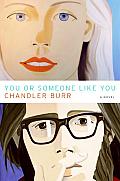
You or Someone Like You by Chandler Burr

You or Someone Like You by Chandler Burr

I don't find this novel's title or cover art particularly appealing.1 My familiarity with the author2 was the only reason I checked You or Someone Like You out to read on my Nook.
At the outset of Burr's roots as an author of nonfiction are clear. He begins with a three-page author's note,3 in which he explains exactly to what extent his fiction is fictional. I did read the author's note (I don't always) and it seemed like overkill to me. A result the author's discomfort with the medium? a mark of our litigious society? However, now that I've finished the novel, I see why he included the note. The entire novel revolves around something that happens to one of the characters. Because of the virulence this incident and its consequences provokes (in the characters and, possibly, in the novel's readers), it was important for the author to ground the event in reality, to affirm that it wasn't something he dreamed up simply to torture his characters.

I have decidedly mixed feelings about You or Someone Like You. I loved how literary it was. The novel is filled with books and references to authors and their various works and it made me want to reread some titles and tackle other authors for the first time. Burr makes some wonderfully astute observations about both literature and the human condition. He also incorporates a bevy of real-life characters (mostly film industry people) in walk-on roles. Some readers will love this aspect of You or Someone Like You, but it didn't do much for me considering that I didn't always recognize the individuals featured.

I do think, though, that Burr was a bit too focused on the moral of his story. Towards the end of You or Someone Like You Burr effectively mutes one of the key characters, allowing the righteous indignation of another to completely swamp the narrative. In doing this Burr is likely to alienate his readers as effectively as his protagonist alienates her acquaintances. There's also the moral itself, which some readers will appreciate and others will find impossible to tolerate.

You or Someone Like You would definitely make for an interesting book club discussion.
  1. Actually, I really don't like the cover. I find both the people pictured on it a bit unnerving
  2. I'd read and enjoyed The Perfect Scent (see post).
  3. He also includes source notes after the concluding chapter

Sunday, April 29, 2012

national poetry month: dylan thomas

I mentioned before that Dylan Thomas' "Do Not Go Gentle Into That Good Night" (first published in 1951 the journal Botteghe Oscure and then in the collection In Country Sleep, now available in Collected Poems) plays a significant role in YA novel Matched and that Ally Condie's use of poetry in the Matched Trilogy inspired me to reconsider my stance on the poetic form.

Rhythmic and compelling, "Do Not Go Gentle Into That Good Night" is a poem that gets into one's head and takes up residence.

"Do Not Go Gentle Into That Good Night" by Dylan Thomas
Do not go gentle into that good night,
Old age should burn and rave at close of day;
Rage, rage against the dying of the light.

Though wise men at their end know dark is right,
Because their words had forked no lightning they
Do not go gentle into that good night.

Good men, the last wave by, crying how bright
Their frail deeds might have danced in a green bay,
Rage, rage against the dying of the light.

Wild men who caught and sang the sun in flight,
And learn, too late, they grieved it on its way,
Do not go gentle into that good night.

Grave men, near death, who see with blinding sight
Blind eyes could blaze like meteors and be gay,
Rage, rage against the dying of the light.

And you, my father, there on the sad height,
Curse, bless, me now with your fierce tears, I pray.
Do not go gentle into that good night.
Rage, rage against the dying of the light.
The Academy of American Poets page on the poem includes the full text as well as an audio clip of someone (I presume Thomas himself) reading the poem.

Saturday, April 28, 2012

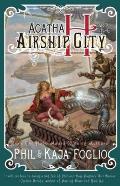
Agatha H. and the Airship City by Phil and Kaja Foglio

Agatha H. and the Airship City by Phil and Kaja Foglio

Agatha H. and the Airship City is a novelization of the first few installments of Phil and Kaja Foglio's Girl Genius comic. I honestly had no intention of reading it (the comic is quite wonderful and I saw Agatha H. and the Airship City as nothing but an unnecessary adaptation), but my resolve faltered when in the face of a library copy sitting in my bedroom (Russell checked it out intending to read it himself).

First things first - I have to say that I hate the cover art for Agatha H. and the Airship City in particular the portrayal of the novel's protagonist (cover-Agatha seems both emaciated and insipid to me). It boggles my mind that the publisher would commission art from an artist (it had to be commissioned because it clearly depicts characters from the novel) when the novel's authors include an artist, who has previously (and extensively) drawn the characters.

As expected I began Agatha H. and the Airship City with a healthy dose of skepticism. But I am happy to report that the more I read of the novel, the more I liked it, but still not as much as I like the comics. The storyline has been filled out and embellished (fuller backstories, for example), but so much of what is portrayed only through the art in the original is lost in the novelization and the tone, especially at the outset, is much bleaker.

Tuesday, April 24, 2012

I am the Messenger by Markus Zusak

I am the Messenger by Markus Zusak

I am the Messenger is a book that's been sitting on my shelf for quite some time. I'm quite sure why I kept passing it over. It's a Printz honor book and I associated it with Joan of Arc (confusing it with The Messenger? or maybe because I'd read a review or synopsis of the book that included the protagonist's comparing himself against what others, including Joan, had achieved by the time they were his age), two things that should have made me want to pick up I am the Messenger straight away. In any case, I finally did get around to reading it a few days ago.

I am the Messenger is told in the first person and opens with a bank robbery in progress. That sounds interesting and compelling, but the first few pages were nothing of the sort (at least for me). The very beginning seemed a bit too familiar so I suspect that I may have started I am the Messenger when I first acquired it and that unremembered false start with the novel would explain my reticence to pick it up again. This time I soldiered through Ed (narrator and protagonist) and his friends baiting the bank robber (who is armed even though they think he's incompetent) and the further I got into the story, the more invested I became in Ed and his quest(s).

Playing cards with cryptic messages are delivered. Ed Kennedy, our hapless nineteen-year-old taxi-driving protagonist, must follow the clues where they lead him and trust his instincts (to effect change within the lives of the individuals to whom he's led) because, in the words of the puppet master, "[his] life depends on it" (113).

The one thing that disappointed me was the reveal. I appreciated the story's resolution (what happens with each of the main characters), but I thought the reveal was a bit much. While I admit that there is something intellectually satisfying about who is responsible for the cards/quests and Ed's transformation, I personally would have preferred for it to have remained a mystery. That being said, I really did enjoy I am the Messenger. I liked the story and I loved its message.

The scene where Ed goes to the public library is one of my favorites. Not just because Ed goes to the library to do research, but because he's coming into his own, standing up for himself, and not letting others make him feel inadequate. Not that I condone talking back to librarians, of course.
"Listen," says the library man. I'm at the counter with all the books. "You can't borrow that many. There's a limit, you know [...]"
[...]
He looks up. "You still want all those books, don't you?"
"That's right." I pile them up onto the counter from the floor. "Basically, I really need them, and one way or the other, I'm going to get them. Only in today's sick society can a man be persecuted for reading too many books." I look back into the emptiness of the library. "They're hardly jumping off the shelves, now, are they? I don't think anyone else wants them just now." (211)
I also liked Ed's first interaction with "the library man," but the whole conversation was a bit long and the best bit isn't quite as good taken out of context.

Sunday, April 22, 2012

national poetry month: emily dickinson

For some unknown reason I've had the first lines of this poem--"Because I could not stop for Death –  / He kindly stopped for me – "--stuck in my head for the past few days (maybe because I've been reading Silent in the Grave by Deanna Raybourn).

I've always been curious about Emily Dickinson and her life and I've been meaning to read a good biography of her since my reading of the disappointment that was The Poet and the Murderer (see post). Any suggestions?

Untitled poem 712 by Emily Dickinson (1890)
Because I could not stop for Death – 
He kindly stopped for me – 
The Carriage held but just Ourselves – 
And Immortality.

We slowly drove – He knew no haste
And I had put away
My labor and my leisure too,
For His Civility –

We passed the School, where Children strove
At Recess – in the Ring – 
We passed the Fields of Gazing Grain – 
We passed the Setting Sun –

Or rather – He passed us –
The Dews drew quivering and chill –
For only Gossamer, my Gown –
My Tippet – only Tulle –

We paused before a House that seemed
A Swelling of the Ground –
The Roof was scarcely visible –
The Cornice – in the Ground –

Since then – 'tis Centuries – and yet
Feels shorter than the Day
I first surmised the Horses' Heads
Were toward Eternity –

Saturday, April 21, 2012

national poetry month:
ravi shankar (and czeslaw milosz)

The falls of the Sawkill River as seen from a trail at Montgomery Place

Yesterday I spent the day at Montgomery Place, a historic site with gorgeous and diverse landscapes. My day of soaking up the natural environment (shaped to various degrees by human hands) and contemplating our changing relationship with nature over time seemed to call for a poem on the topic.

My first instinct was to grab Second Space by Czeslaw Milosz, a title that survived my vicious weeding in spite of (or rather: because of) the fact that I'd never spent any time reading it. I'm sure three things contributed to this book's entrance into my book collection:  author is a Nobel Laureate, the cover is gorgeous and evocative, and it was free/cheap. My memory of the cover (which features an illustration by Monika Klimowska) is what made me seek out Second Space. I did not find what I wanted within the volume and I'll admit that in my disappointment I contemplated including Second Space in our next donation to the Field Library Bookstore. I'm going to give Second Space a second chance, hoping that I'll be less impatient with it next time I decide to go through it.

My next course of action was to search the offerings on the Academy of American Poets website. This site is a wonderful resource. In addition to searching by title, author, and keyword, visitors can search the site's featured poems by theme, movement, and form. I came across this poem by Ravi Shankar1 (see him reading the poem), which fit the bill perfectly.

"Crossings" by Ravi Shankar
Between forest and field, a threshold
like stepping from a cathedral into the street—
the quality of air alters, an eclipse lifts,

boundlessness opens, earth itself retextured
into weeds where woods once were.
Even planes of motion shift from vertical

navigation to horizontal quiescence:
there’s a standing invitation to lie back
as sky’s unpredictable theater proceeds.

Suspended in this ephemeral moment
after leaving a forest, before entering
a field, the nature of reality is revealed.
"Crossings" was published in the chapbook Seamless Matter: Thirty Stills (2010).
  1. The American poet, not the famous Indian sitar player (and father of Norah Jones).

Sunday, April 15, 2012

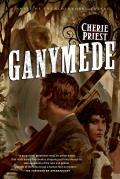
Clockwork Century, Cherie Priest


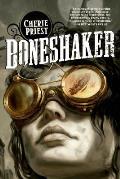
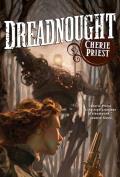
A few weeks ago Russell collected a few of Cherie Priest's Clockwork Century books from the library for me. I'd been quite anxious to read them after hearing so much about Boneshaker (steampunk with zombies, oh my!).

He brought the three books pictured above--Boneshaker, Dreadnaught, and Ganymede--the first, third, and fourth installments in the series.1 Happily the books in Clockwork Century series stand alone so it wasn't too problematic to skip Clementine, the second book.

I have to admit that I didn't enjoy Boneshaker as much as I expected to. I was enamored of the novel's premise (a Civil War-era Seattle ravished by a toxic gas, which causes zombism among other things, leaking from the earth after an unscrupulous scientist misuses new excavation technology), but less than enthused by its pervasive pessimism, slow pacing, and how much was expected of the reader in the way of suspension of belief (I'm not referring to the zombies or alternate history, but how characters interact with their environment and some of their decisions). If I hadn't already had Dreadnaught and Ganymede on hand I might not have continued on with the series.  I am happy that I did, though, because I liked the other two better than Boneshaker.

Priest's world becomes much more fully realized in Dreadnaught and Ganymede. Neither of these books take place primarily in Seattle, though Seattle's history and its role as the source of the toxic gas play an important part in the two stories.  The settings though more various in Dreadnaught (in the Southern theater of the American Civil War and cross country by rail) and Ganymede (New Orleans and its environs) are much more clearly drawn and realistic. Their characters are also more sympathetic.

I suppose it is just that Priest has found her stride by the time she writes the third book in the series. I'd recommend Dreadnaught and Ganymede unreservedly, but Boneshaker only as context for the other books in the series (though there are some really good things about it).
  1. Clementine is the second.

Saturday, April 14, 2012

national poetry month: baudelaire

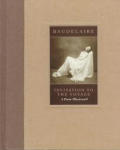
One of the few poetry books I own is Invitation to the Voyage: A Poem Illustrated, a gorgeous presentation of Charles Baudelaire's "Invitation to the Voyage" (from Les Fleurs du Mal, originally published in 1857).

I treasure this book.  It is a feast for the eyes and the mind.  The designer and editors set the poem--presented both in the original French and in translation by Richard Wilbur--alongside wonderfully evocative 19th century photographs.  Also included in the volume is a related prose poem of the same title (published posthumously in Le Spleen de Paris, 1869) with a translation by Carol Cosman. 

The image below is one that I took of my copy of the book. The image (Seville, Salon de Marie de Padilla, L'Alcazar, c. 1870-1880, photographer unknown) illustrates the following segment:
Furniture that wears
The lustre of the years
Softly would glow within our glowing chamber
There are other photograph/phrase combinations that I like better, but I had some difficulty getting clear shots and this is one that came out decently.

Even if you can't get your hands on a copy of Invitation to the Voyage: A Poem Illustrated, I'd definitely recommend reading "Invitation to the Voyage." Over the years a number of different translators tackled "Invitation to the Voyage" and each has his/her own take on the poem. FleursDuMal.org, a site dedicated to Baudelaire's poetry in general and Les Fleurs du Mal in particular, shares the translations done by William Aggeler, Roy Campbell, Edna St. Vincent Millay, Will Schmitz on its Invitation-to-the-voyage page. The Academy of American Poets features Keith Waldrop's translation and Richard Wilbur's translation can be read in this MoMA lesson plan (apparently Matisse's Luxe, calme et volupté was inspired by "Invitation to the Voyage").

Tuesday, April 10, 2012

Personal Days by Ed Park

Personal Days by Ed Park

I checked Personal Days out on a whim. I happened across it while browsing the library's available ebooks. It sounded Office Space-like, it had good reviews blurbs, and I liked the cover.

Let me start off my admitting that I did not finish Personal Days. I gave up around page 145 when I realized that all of Part III (pages 141-182) took the form of one email, one one-paragraph email, one one-paragraph drunken email. The idea of having to read those last 40 unformatted stream-of-consciousness pages on my Nook was simply too much for me and I threw in the towel.  I hadn't connected with any of the characters--in a sense they were as much strangers with me as they were to each other--so I felt no compunction about giving up on Personal Days.

That being said, Personal Days is indeed hilarious as advertised (it had its moments). The narrative style changes throughout the course of the novel though  it is quite choppy in general.  I'm sure the choppiness is  intentional and meant to play up the anxiety the characters feel in the workplace.

Anyone who has ever worked in an office environment can likely relate to what the characters in Personal Days think, feel, and experience (more so those who have worked in an unhealthy workplace). I would not recommend Personal Days to anyone working at an organization where layoffs are feared if not imminent as it will likely hit a little too close to home.

Sunday, April 08, 2012

Major Pettigrew's Last Stand
by Helen Simonson

Major Pettigrew's Last Stand by Helen Simonson

Helen Simonson's debut novel Major Pettigrew's Last Stand is a charming little1 book.

It's protagonist is widower Ernest Pettigrew, a 68 year-old retired British army major. The unexpected death of Major Pettigrew's younger brother leaves Pettigrew decidedly out of sorts, but that disorientation is precisely what allows him to see the proprietress of the village shop Jasmina Ali in a new light.

As their friendship develops over errand-running, tea, and book discussions, it seems that the 58 year-old Mrs. Ali may be Pettigrew's soul mate. But will their budding romance survive in the face of malicious village gossip and a double dose of familial disapproval?

Major Pettigrew's Last Stand has some wonderful laugh-out-loud moments. Pettigrew's development over the course of the novel is both endearing and believable. Mrs. Ali's tendency toward culturally-dictated self-sacrifice is tempered by both her intellect and unexpected passion. The novel's host of secondary characters run the gambit (sympathetic to villainous) and their actions, comments, and perspectives show the full range of those individuals like Pettigrew and Mrs. Ali and would encounter as residents of a formerly sleepy village in the English countryside.

As is likely clear by the above, I really enjoyed Major Pettigrew's Last Stand, which I borrowed from my mom who selected it for reading on her upcoming vacation. I loved both Pettigrew and Mrs. Ali (as well as Amina, another long-suffering secondary character) and was horrified by the insensitivity exhibited by characters like Pettigrew's son and the society ladies and the actions of some of Mrs. Ali's relatives. The thing I liked best about the the novel is that Simsonson doesn't tie everything up too neatly at the end.
  1. At 350+ pages, Major Pettigrew's Last Stand is not a particularly short novel. "Charming little book" just seemed like the right descriptor.

Saturday, April 07, 2012

national poetry month:
William Carlos Williams

Williams' "The Red Wheelbarrow" is one of the only poems I can recite by rote. If I remember correctly, I memorized it when I was in the 6th grade. Compelling and deceptively simple, it could very well be my favorite poem.

"The Red Wheelbarrow" -
so much depends
upon

a red wheel
barrow

glazed with rain
water

beside the white
chickens.

Archivists in Ally Condie's Matched Trilogy

As I mentioned before (see post), Ally Condie's Matched Trilogy--Matched, Crossed, and Reached (forthcoming November 2012)--features a group of individuals called the Archivists.

In the series, the Archivists do collect and preserve cultural heritage (in this case what are essentially copies of burned books, etc), it is so that they are able to sell what they have on the black market. They exist on the fringes of society (the only reliable way to find one is to go to the museum, go to the patriotic exhibit, and ask to hear about "the glorious history of [the providence]") and they trade in information and connections as well.

The first mention of the Archivists in the series:
"There are people who call themselves Archivists," Ky says. "Back when the Hundred Committees made their selections, the Archivists knew the works that didn't get selected would be a commodity. So they saved some of them. [...]
"Cassia, the Archivists aren't altruistic. They saw a commodity and they did what they could to preserve it. Anyone can have it who's willing to pay, but their prices are high." (Matched, chapter 25, listened to audio version so I don't have a page number and the quote above may not be exact)

Friday, April 06, 2012

April is National Poetry Month

 
As one can tell from my tag cloud,1 I don't write about much about poetry.  While I do enjoy and appreciate the occasional poem, I generally find poetry less accessible (to me personally) than prose. But, April is National Poetry Month (gorgeous poster,2 no?) and I've been thinking about poetry quite a bit lately (thanks to Ally Condie's Matched trilogy),3 so the time is ripe.

I'll share a poem tomorrow and at least one other every week for the rest of the month. And, maybe this focus will encourage me to read more poetry going forward.  We shall see.
  1. Before this post, only 7 were tagged "poetry." Of course there may be more poetry references than I've actually tagged, but it's still quite a small percentage.
  2. Designed by Chin-Yee Lai for the Academy of American Poets' National Poetry Month and featuring lines from "Our Valley" by Philip Levine.
  3. The Society, the group that governs the repressive future society depicted in the series, decided to "eliminate distractions such as excess poetry and music while retaining an optimal amount to enhance culture and satiate the desire for experiencing art" (Crossed, 107). Committees were formed, one for each area of the arts, and directed to choose the one hundred examples of each art that would be saved. The series takes place decades after this selection (the teenage protagonist's grandmother was a member of the Hundred Poems committee) and two of the discarded (banned) poems are integral to the plots of Matched and Crossed, Dylan Thomas' "Do Not Go Gentle into That Good Night" and Tennyson's "Crossing the Bar" respectively.

Sunday, April 01, 2012

my favorite library?

Reading through the most recent issue (March/April 2012) of The University of Chicago Magazine, I was struck by the photograph (far right in the screenshot above) taken by Jared Ryder of the stacks of the Reg (ie. the Joseph Regenstein Library) that accompanied Amy Braverman Puma's "Visceral Chicago" article.1
Cue a wave of nostalgia for my undergraduate years. Oh how I loved the Reg. The open areas with their its color-coded carpet floors ("my" locker and carrel were on a discipline-inappropriate floor, the 4th I think it was, since I preferred the ambiance). The stacks with all their treasures. The intensity of its inhabitants. Its quirky architecture and backstory (supposedly shaped like the continental US with windows reminiscent of its namesake's claim to fame: the windowed envelope).  How quintessentially U of C it was (not architecturally, but intellectually).

The library has changed in the years since I left Chicago (granted not as much as my childhood public library, which was razed and replaced by a larger, greener building in 2007), I know it has. 700+ undergraduates took up residence practically right next door just months after I graduated.   How could that not change the demographic?  There's a new alien library building (Mansueto Library) adjacent and connected to the Reg, and collections have been and continue to be relocated. And surely countless other factors I know nothing about.
I supposed that I can't say that the Reg is still my favorite library.  It may have changed beyond recognition. It is, however, the library of my dreams.
  1. Inexplicably in the print edition, it is the photo of the comfy chair (far left in the screenshot above) from yet another U of C library (Harper Memorial Library) that is the centerfold and opener to "Visceral Chicago" by Amy Braverman Puma. Regardless of my personal library preferences, I think this was a poor choice. Any of the others, especially the two that didn't make it into the print edition (another shot of Harper comfy chair, Reynolds Club with superstitions seal), would have been better. The crease, though right at the division between upper and lower cushions, makes the item featured even more difficult to identify especially when readers first encounter the images rotated 90 degrees to the left.