Sunday, September 09, 2012

shades of grey
(and an explanation of sorts for recent silence)

So, I loaned my mom Shades of Grey by Jasper Fforde (see post). She started reading it recently and brought the book along to the hospital with her to read in the downtime before her shoulder surgery.1 Today she told me that both the nurse there and my father were completely scandalized that she was reading the book and that she was reading it in public.  Even worse for my father is that she'd gotten the book from me.


Shades of Grey: The Road to High Saffron is zany dystopian fiction.
Fifty Shades of Grey is poorly written dominant/submissive erotica (or so I've been told).

My poor mother was apparently unaware of the Fifty Shades of Grey phenomenon so I had to fill her in. While I acknowledge a similarity in the two novels' titles, this particular case of mistaken identity seems odd to me considering that they were horrified by seeing her read the book, rather than by her making passing reference to the fact that she was reading the book. The Fifty Shades books have very distinctive (and widely publicized) monochromatic blue-gray cover art. None of the various covers for Shades of Grey look remotely similar. And while the cover art on my copy isn't as colorful as some of the other editions', I can't imagine confusing the following -
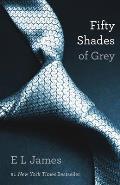
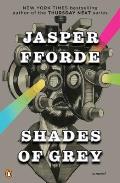
And, just to be clear, while I personally have no plans to read Fifty Shades of Grey and its sequels, I pass no judgment on those who do. I follow a "read what you like, like what you read" philosophy.  And it seems like the Fifty Shades books have inspiring many adults to read, which is a very a good thing.

n.b. The staff at your public library are not judging you based on your reading habits (unless, of course, you're the one "reading" The Joy of Sex in the men's washroom)2 so go ahead and check out Succubus Blues, or whatever else floats your boat, without shame.

In any case, on to the parenthetical. It's been something like 2.5 weeks since my last post. I apologize for my silence.

Erratic posting is really a result of two things.  First, when you have to do something that you like (in this case: writing about books), it begins to feel more like work than like fun. Second, ever since we moved Russell and I have been sharing one computer at home. And by the time I've finished all the stuff I need to do on the computer, I don't always have the time or energy for writing blog posts. I have been reading even if I haven't been keeping my side-bar list updated3 and I do have a bunch of titles that I'm planning to review. My posting schedule will no doubt continue to be erratic at least for the foreseeable future. Please forgive me.
  1. Surgery went well and she seems to be doing just fine.
  2. No, I'm not joking. At a library where a colleague of mine worked part of the close-up procedure involved a trip to the men's room to collect The Joy of Sex for reshelving.  The joys of working in a public library.
  3. I'll update it before I log out of blogger today.

Wednesday, August 22, 2012

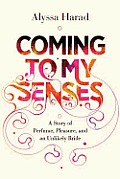
Coming to My Senses by Alyssa Harad

Coming to My Senses: A Story of Perfume, Pleasure, and an Unlikely Bride
by Alyssa Harad


Author Alyssa Harad is a perfumista and a contributor to Perfume-Smellin' Things, one of the perfume blogs I regularly read. In Coming to My Senses, Harad recounts her first year of perfume obsession, which just so happens to be the year leading up to her wedding.

I like perfume. I'm not fluent in the language, nor am I confident in my taste, but I'm interested in moving beyond blog-reading and effortless sampling. So I really am an ideal reader for this book.

Coming to My Senses begins with Harad's awakening to first the language of perfume lovers and then to the perfumes themselves. I enjoyed following Harad on her voyage of olfactory discovery. I loved the details, her openness, her descriptions. Harad begins to write about being a bride about a third of the way through the book. It's at that point that I worry that I'll lose interest in the narrative. As much as I like Harad by this point, I'm not sure that I want to know about her wedding-planning. I worry that it will take away from what I think is the real focus of the memoir. Luckily, Harad manages to remain true to the theme of discovery and perfume both reflecting and enhancing life despite discussing wedding preparation (and a friend's sex change). Strangely enough, though, one of my favorite parts of Coming to My Senses revolves around Harad's bridal shower.

When Harad writes about a particular perfume she doesn't always mention it by name. I understand why (she explains why in her author's note1), but I can't help feeling a bit disappointed. Because I'm still learning about perfume and its myriad nuances, I'd find it so helpful to know exactly which perfume Harad was referencing at any given time. In any case, I enjoyed Harad's writing (especially the more contemplative passages) and her honesty. Coming to My Senses also inspired me to overcome my fear of snooty salespeople and visit a perfume boutique last time I went into New York City. I've also ordered a bunch of samples to try out at home.

One last not-directly-book-related comment -
Harad's author website, promoted in her author's note as where she'll give readers "the latest, updated scoop" (vii), is underwhelming. It has a blog with one post dated June 26, 2012 surrounded by an architecture with lots of intriguing, but empty rooms. Even the Upcoming Events page is out of date. The more I explored the site, the more disappointed I became. I wonder why the publisher's PR people would put together the site and not maintain it (the book only came out last month) and I wonder why Harad agreed to it. One nice, long blog post is worse than none.
  1. I have provided the names of the perfumes featured when I felt it was crucial to the telling of the story. However, in some cases I preferred to leave the names out and keep the emphasis on the description of their scents and the emotions they evoked at the moment. Doing so allowed me to avoid recommending perfumes that may be discontinued or reformulated by the time this book is published" (vii).
disclosure: I received a review copy of Coming to My Senses from Viking via NetGalley.

Saturday, August 18, 2012

sync this week:
Whale Rider & Call of the Wild

Sync's offerings this week (Thursday, August 16 through Wednesday, August 22, 2012) are:


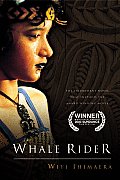
The Whale Rider by Witi Ihimaera
and
The Call of the Wild by Jack London


Eight-year-old Kahu, a member of the Maori tribe of Whangara, New Zealand, fights to prove her love, her leadership, and her destiny. Her people claim descent from Kahutia Te Rangi, the legendary "whale rider." In every generation since Kahutia, a male heir has inherited the title of chief. But now there is no male heir, and the aging chief is desperate to find a successor. Kahu is his only great-grandchild--and Maori tradition has no use for a girl. But when hundreds of whales beach themselves and threaten the future of the Maori tribe, it is Kahu who saves the tribe when she reveals that she has the whale rider's ancient gift of communicating with whales.
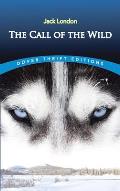
A classic novel of adventure, drawn from London's own experiences as a Klondike adventurer, relating the story of a heroic dog, who, caught in the brutal life of the Alaska Gold Rush, ultimately faces a choice between living in man's world and returning to nature

Go here to get this week's downloads.
n.b. at the time I'm publishing this post (as when I checked the site earlier in the day), Sync has the following note posted (so you may not be able to download this week's titles right away):
Our apologies! Our host is having issues with the current downloads. The service will be up and running as soon as possible!

Remember, these books don't expire like the e-audiobooks you get from the library. So, be sure to download the books even if you don't think you'll get around to listening to them right away.

More information about Sync is available in this post.

serenity

This week I had one of those exceedingly frustrating days that make you want to pull all your hair out.  On days like those, I'm in desperate need of some serenity.1 Last year I bought myself this ring2 from Etsy seller donnaOdesigns. For me it is a perfect reminder to breathe and to focus on what I actually can control.

My hand, my photo.
There are much better images available if you follow the links above.

It features the Serenity Prayer:
God, grant me the serenity to
Accept the things I cannot change,
Courage to change the things I can, and
Wisdom to know the difference.
While the prayer is often misattributed to St. Francis of Assisi, I understand that is was actually written by an early 20th century theologian named Reinhold Niebuhr though the current, popular formula deviates from the original.3
  1. Serenity: the state or quality of being serene, calm, or tranquil; not agitated.
  2. The price has gone up about $15 since then, but I love it so much that I'd still buy it at the current price.
    If you want one for yourself, I'd recommend ordering a full size larger than the size you'd normally wear on your preferred finger. I had to send mine back to get resized because it didn't occur to me that I needed to size the finger near the first joint rather than at its base.  In any case, the donnaOdesigns was very accommodating.
  3. "Father, give us courage to change what must be altered, serenity to accept what cannot be helped, and the insight to know the one from the other."

Tuesday, August 14, 2012

PSA: audiobook giveaway

My friend Jessica alerted me to this great giveaway going on at Publishers Weekly's audiobook blog, Listen Up -


The 30+ book prize pack includes:
All you need to do to enter is post a comment on the relevant blog post, preferably about your favorite audio book or narrator. That's it. They say that the winner will be announced on 31 August, so I assume it closes on the 10th. Good luck.

Sunday, August 12, 2012

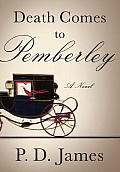
Death Comes to Pemberley by P. D. James

Death Comes to Pemberley by P. D. James

I mentioned last week that I'd started reading Death Comes to Pemberley. I borrowed the book from a Jane Austen purist who'd unwilling received a copy as a gift. While I do love Austen and Pride and Prejudice in particular, I'm open to adaptations and spin-offs1 and I started Death Comes to Pemberley with an open mind. Actually I was quite optimistic considering that that this particular spin-off was written by an author of some note. While I don't recall having read James' work before, I know her by reputation.

Death Comes to Pemberley takes place in 1803 and 1804 (Elizabeth and Darcy have been married for six years). The day before Lady Anne's ball, now an annual event at Pemberley, Mrs. Wickham arrives unexpectedly and in a state of great distress. In the course of that night it becomes clear that Captain Martin Denny has been murdered in the woods surrounding Pemberley and Wickham is the chief suspect.

James is quite obviously an Austen fan. In addition to her apologetic author's note, there's one passage that makes her feelings abundantly clear. When Elizabeth is recounting the time of her life put down in Pride and Prejudice, she speculates: "If this were fiction, could even the most brilliant novelist contrive to make credible so short a period in which pride had been subdued and prejudice overcome?" (47, emphasis mine).

I do feel that James tried to be true to Austen. She tries, successfully I think, to mimic Austen's style and language including the deliberate use of words that are now obsolete.2 Death Comes to Pemberley is clearly written by an Austen lover for other Austen lovers. And I'd recommend a quick reread of Pride and Prejudice before starting Death Comes to Pemberley because some of Pride and Prejudice's less memorable secondary characters play significant roles in Death Comes to Pemberley.

Death Comes to Pemberley was a surprisingly slow read for me (especially considering that it is only 291 and a mystery). I appreciated a different take on a Pride and Prejudice sequel, but I really wasn't crazy about the story. I didn't have the entire mystery figured out before the reveal, but I was definitely looking in the right direction. My strongest feeling about the book has to do with Darcy. I think one of the reasons Darcy is such a beloved romantic hero is because he is so horribly enigmatic. In Death Comes to Pemberley much of the narrative is being told from Darcy's perspective. We learn much about his thoughts and actions during the course of the novel and, worse, more of the wheres, whys, and hows of everything that happened during Pride and Prejudice. Precious little left to the imagination.
  1. I even read that atrocious, zombies-added one.
  2. I should have kept track of them to feature them on the blog, but I didn't have writing materials close to hand as I was reading and it would have been unforgivably rude to dogear someone else's book.

Thursday, August 09, 2012

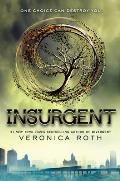
Insurgent by Veronica Roth

Insurgent by Veronica Roth
series: Divergent Trilogy, 2

Considering how much I liked Divergent (see post), it's no surprise that I enjoyed its sequel, Insurgent.

Insurgent continues the overarching storyline begun in Divergent. During the course of the novel readers learn more about the other factions (and the factionless) and how the groups relate to each other. We also get a better idea of how five-faction society functions as a whole and how and why it came into being.

Beatrice and her love interest from Divergent maintain their relationship1 and it continues to be complex and somewhat complicated.

On a side note, I love Insurgent's cover art. It's beautiful and compelling with great movement. It also echoes Divergent's cover in a nice way while still standing on its own legs.
  1. Good. I dislike nothing more than series that follow the new-installment-new-love-interest modus operandi.

sync this week: Skulduggery Pleasant & Dead Men Kill

Sync's offerings this week (Thursday, August 9 through Wednesday August 15, 2012) are:


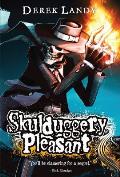
Skulduggery Pleasant by Derek Landy
and
Dead Men Kill by L. Ron Hubbard


Meet Skulduggery Pleasant: ace detective, snappy dresser, razor-tongued wit, crackerjack sorcerer, and walking, talking, fire-throwing Skeleton — as well as ally, protector, and mentor of Stephanie Edgley, a very unusual and darkly talented 12-year-old. These two alone must defeat an all-consuming ancient evil. The end of the world? Over Skulduggery Pleasant's dead body.
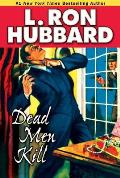
When several of the city's most respected citizens are inexplicably killed by what appear to be zombies, all Detective Terry Lane has to go on is a blue grey glove, a Haitian pharmacy bill for some very unusual drugs and a death threat from a mysterious stranger. Matters are soon complicated when a beautiful nightclub singer shows up who claims to have information that could solve the case, but whose motives are plainly suspect. Against his better judgment, Terry investigates her lead only to find himself sealed in a coffin en route to the next zombie murder—his own.
Go here to get this week's downloads.

Note: these books don't expire like the e-audiobooks you get from the library. So, be sure to download the books even if you don't think you'll get around to listening to them right away.

More information about Sync is available in this post.

Tuesday, August 07, 2012

word: sardonic

Elizabeth had never been popular, indeed the more perceptive of the Meryton ladies occasionally suspected that Miss Lizzy was privately laughing at them. They also accused her of being sardonic, and although there was uncertainty about the meaning of the word, they knew that it was not a desirable quality in a woman, being one which gentlemen particularly disliked. (Death Comes to Pemberley, 9; emphasis mine)
I began (with cautious optimism) P.D. James' nod to Austen this evening. When I came across the passage above, I knew that I must share it in a featured-word post. 

From the OED (vol. 8, part 2, 1914) -
Sardonic, adj.
Of laughter, a smile: Bitter, scornful, mocking. Hence of a person, personal attribute, etc.: Characterized by or exhibiting bitterness, scorn or mockery. (111)

Sunday, August 05, 2012

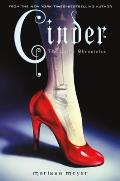
Cinder by Marissa Meyer

Cinder by Marissa Meyer
series: Lunar Chronicles, 1

work colleague: So, what are you reading now?
Karen: Oh, it's a retelling of Cinderella set in a dystopian future. She's a cyborg.

In Cinder we have a classic fairytale set in the (far distant) future. The moon, now a nation known as Luna, is populated by a race of mutant humans with mind-control powers (which most humans consider magic, but is described by the scientifically minded as the ability to manipulate bio-electric energy).1 After the devastation of World War IV, Earth's remaining nations signed a peace treaty. But, while there is peace on Earth, humans are threatened both by a worldwide pandemic, a plague called letumosis, and by the possibility of war with Luna.

Linh-mei (aka Cinder) is a teenage mechanic living in New Beijing, capitol of the Eastern Commonwealth. While Cinder survived the airship accident that killed both her parents, the surgeries that saved her left her less than 70% human. She is a cyborg, a second-class citizen. Her adoptive father contracted letumosis shortly after her assuming guardianship of Cinder, her care was left to his wife. Adri resents being burdened with Cinder, of whom she is ashamed and whom she only tolerates because of Cinder's ability to support the family.

When Prince Kaito, first in line to the throne, seeks Cinder out to repair his personal android, he is unaware that she is a cyborg...

I have to admit that I was a bit reticent to read Cinder. Given its premise,2 I figured that the novel would either be absolutely fantastic or perfectly horrendous depending on its execution. But I overcame my reluctance when I happened across Cinder among my library's e-audiobook offerings.

While it would have been easy for debut novelist Meyer to the overdo it with Cinder. There are a lot of different elements that she has to balance while still remaining true to the original story. But Meyer manages brilliantly. Cinder is true to the original while being something completely new. I still feel like the inclusion of the paranormal elements3 was a bit much and likely unnecessary, but they didn't bother me nearly as much as I would have expected them to. Cinder is a strong, sympathetic character. While she's still an unloved step-child with the ability to (unintentionally) beguile a prince, Cinder is so much more than that.  She is independent, brave, and a problem-solver who doesn't need a fairy godmother to get her to the ball.4 Prince Kai is much more nuanced than the traditional Prince Charming character and his decision about Cinder is more complicated than simply overcoming prejudice. Some of the secondary characters are a bit one-dimensional, which is almost to be expected in a fairytale considering that fairytales are full of stock characters, but others are perfectly crafted.

I will definitely be continuing on with this series. Per Meyer's website, the second installment Scarlet will be released in Feburary 2013 and will focus on a Little Red Riding Hood character.
  1. Shades of vampirism, not blood-sucking, but being able to glamour humans and an aversion to mirrors.
  2. Let's review how much is packed into this one story. We have a retelling, set in a dystopian future with a heavy emphasis on science fiction and a dash of the paranormal. I'm overwhelmed just setting that out.
  3. There's more than what is mentioned in footnote 1, but explication would involve spoilers.
  4. There is a fairy godmother character, but Cinder comes to her rescue rather than the other way around.

Saturday, August 04, 2012

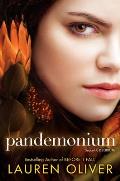
Pandemonium by Lauren Oliver

Pandemonium by Lauren Oliver
series: Delirium Trilogy, book 2

Pandemonium is the sequel to Lauren Oliver's Delirium and the second in an expected trilogy. I was disappointed by Delirium when I read it last year (see post), but that didn't keep me from feeling like I needed to reread it before I sent my copy (along with a bunch of other books) off to live with Russell's voracious-reader sister. I hadn't been planning on continuing with the series, but given the fact that I was rereading Delirium, I decided to put myself on the library waiting list Pandemonium.

And, I'm glad that I did because I liked Pandemonium better than Delirium. Again in Pandemonium I was unhappy with how the romance played out.1 But, Oliver gives us a lot more information about the society in this second installment.  There's more menace and suffering and because of that Pandemonium works much better as a dystopian novel.
  1. This is vague and unspecific, but it's still a bit of a spoiler so continue with the footnotes at your own risk.


    SPOILER - And we have a love triangle to look forward to in book three, ugh.

Thursday, August 02, 2012

sync this week:
Daughter of Smoke and Bone
& A Tale of Two Cities

Sync's offerings this week (Thursday, August 2 through Wednesday, August 8, 2012) are:


and
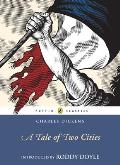
A Tale of Two Cities by Charles Dickens


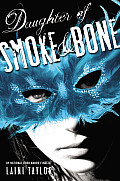
Around the world, black handprints are appearing on doorways, scorched there by winged strangers who have crept through a slit in the sky.
In a dark and dusty shop, a devil's supply of human teeth grown dangerously low.
And in the tangled lanes of Prague, a young art student is about to be caught up in a brutal otherwordly war.
Meet Karou. She fills her sketchbooks with monsters that may or may not be real; she's prone to disappearing on mysterious errands; she speaks many languages--not all of them human; and her bright blue hair actually grows out of her head that color. Who is she? That is the question that haunts her, and she's about to find out.
When one of the strangers--beautiful, haunted Akiva--fixes his fire-colored eyes on her in an alley in Marrakesh, the result is blood and starlight, secrets unveiled, and a star-crossed love whose roots drink deep of a violent past. But will Karou live to regret learning the truth about herself?

* I listened to the audio version of Daughter of Smoke and Bone last month and loved it (see post).

"It is a far, far better thing that I do, than I have ever done; it is a far, far better rest that I go to than I have ever known."
After eighteen years as a political prisoner in the Bastille, the ageing Doctor Manette is finally released and reunited with his daughter in England. There the lives of the two very different men, Charles Darnay, an exiled French aristocrat, and Sydney Carton, a disreputable but brilliant English lawyer, become enmeshed through their love for Lucie Manette. From the tranquil roads of London, they are drawn against their will to the vengeful, bloodstained streets of Paris at the height of the Reign of Terror, and they soon fall under the lethal shadow of the guillotine.


Go here to get this week's downloads.

Note: these books don't expire like the e-audiobooks you get from the library. So, be sure to download the books even if you don't think you'll get around to listening to them right away.

More information about Sync is available in this post.

Tuesday, July 31, 2012

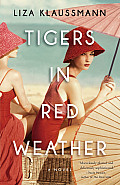
Tigers in Red Weather
by Liza Klaussmann

Tigers in Red Weather by Liza Klaussmann

Like Wish You Were Here by Stewart O'Nan, which I posted about earlier this month (see post), Tigers in Red Weather concerns itself with an extended family and their interpersonal relationships using time spent together at a summer cottage (this time on Martha's Vineyard) as a catalyst.  The novel is also told variously from the perspectives of the individual family members, but Tigers in Red Weather has a series of first-person narrators rather than one third person omniscient.

While Wish You Were Here takes place over a single week, Tigers in Red Weather unfolds over twenty-plus years. From the end of World War through the late 1960s (with a bit of a flashback to the war years), Tigers in Red Weather follows first (female) cousins Nick and Helena (and Nick's husband Hugh) as they adjust to post-war and married life. Their children Ed and Daisy join the narrative as they reach the age of reason, spending their summers at Tiger House.

Throughout the novel there's an air of mystery and deep-seated secrets. One summer there's a murder on the Vineyard, and while that adds to the intrigue, it's never really a question of whodunnit. Rather the focus of Tigers in Red Weather is on interfamilial deceptions, the lies individual characters tell themselves and each other.

Unfortunately, it was difficult to connect with any of the central characters. Two of them were repugnant the majority of the time. The others ranged from generally likeable to vaguely incomprehensible, but all suffered from some level of inconsistency within their characters that made them at best unsympathetic, but at worst unbelievable.

I will say that the novel's ending is unexpected and quite well done.

The poem that no doubt inspired the novel's title, and which appears in part at the very end of the narrative: "Disillusionment of Ten O'Clock" by Wallace Stevens (1915)
The houses are haunted
By white night-gowns.
None are green,
Or purple with green rings,
Or green with yellow rings,
Or yellow with blue rings.
None of them are strange,
With socks of lace
And beaded ceintures.
People are not going
To dream of baboons and periwinkles.
Only, here and there, an old sailor,
Drunk and asleep in his boots,
Catches tigers
In red weather.
"Disillusionment of Ten O'Clock" was first published in the collection, Harmonium.
disclosure: I received a review copy of Tigers in Red Weather from Little Brown & Co. via NetGalley.

Sunday, July 29, 2012

Richard Guy Wilson and Edith Wharton

Yesterday I had the opportunity to here noted architectural historian Richard Guy Wilson (he of America's Castles fame) speak at the incomparable Montgomery Place estate in Annandale-on-Hudson (near Red Hook, NY).

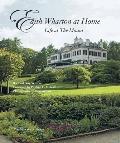
The introduction mentioned Richard Guy Wilson's new book, which I think will be of interest not only to those who appreciate architecture. Its focus is on The Mount (now a historic house museum) and Edith Wharton's life there. Because the publication of Edith Wharton at Home is timed to coincide with Wharton's 150th birthday, I first suspected that the book might be a commissioned anniversary publication, but now that I've learned that Monacelli Press is associated with Random House that doesn't seem likely. But, even if it Edith Wharton at Home was a commissioned anniversary publication, the caliber of its author and subject practically ensures a quality product.

Edith Wharton at Home: Life at the Mount by Richard Guy Wilson
(forthcoming September 2012)

Completed in 1902, The Mount sits in the rolling landscape of the Berkshire Hills, with views overlooking Laurel Lake and all the way out to the mountains. At the turn of the century, Lenox and Stockbridge were thriving summer resort communities, home to Vanderbilts, Sloanes, and other leading families of the Gilded Age. Edith Wharton at Home connects The Mount to that milieu and details Wharton's design of the house and landscape. Embodying principles set forth in Wharton's famous book The Decorating of Houses and her deep knowledge of Italian gardens, The Mount is truly an autobiographical house. There Wharton wrote some of her best-known and successful novels including Ethan Frome and House of Mirth.
Published to coincide with the celebrations surrounding the 150th anniversary of Wharton's birth, Edith Wharton at Home presents Wharton as a writer, as a designer, and as a hostess. Authoritative text by Richard Guy Wilson, Commonwealth Professor of Architectural History at the University of Virginia and host of the popular series America's Castles is illustrated with archival images as well as new color photography of the restoration of The Mount and its spectacular gardens.

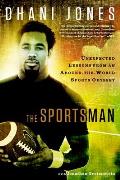
The Sportsman by Dhani Jones

I do so love watching the Olympic Games. While I prefer the winter games and Canadian coverage,1 I'm making the best of things with NBC-group coverage this year. In any case, the XXX (modern) Olympiad seemed like the perfect excuse to post about a sports memoir that I should have reviewed last year.

The Sportsman: Unexpected Lessons from an Around-the-World Sports Odyssey
by Dhani Jones with Jonathan Grotenstein


I need to open my comments on The Sportsman with the admission that I did not finish the book. Regular readers will be aware that I prefer fiction to nonfiction and that I don't often post about memoirs or sports-related books. Lest any of you think that my preferences yielded to bias against The Sportsman, I submit this confession: I am a huge Dhani Jones fan.2 When Time Warner dropped the Travel Channel from our Buffalo cable package, Dhani Tackles the Globe is the show I mourned the most. If anything, my love of Dhani likely predisposed me toward his memoir.

I was excited to get my hands on a review copy of The Sportsman and couldn't wait to get an extra dose of that endearing Dhani personality. The memoir's subtitle, "Unexpected Lessons from an Around-the-World Sports Odyssey," left me expecting a narrative built upon Dhani's experiences making Dhani Tackles the Globe and presented in a style like referenced the television show.

The memoir starts from the beginning ("my parents took two years to name me," 3), explaining how Dhani developed a love of sport and how he came to play football despite his mother's objections. Dhani's first person narrative is a bit too informal (in describing his teenage attitude problems he uses "mofo" and "suck my left nut"), but I was willing to give him (and his coauthor) the benefit of the doubt. But, on page 5, the narrative is interrupted by "A note from Commander Samuel L. Jones a.k.a. Dad". This I did not like at all. Yes, it did give an alternative perspective on Dhani at that period of this life, but it was jarring and odd (shades of helicopter parenting). And, couldn't Dad's viewpoint be shared in Dhani's own words? When a note from "Dr. Nanacy Jones a.k a. Mom" cropped up on page 14, I knew that I wasn't going to make it through The Sportsman. I gave up shortly thereafter.  

I was originally reticent to post about The Sportsman since I hadn't actually read very much of it.  I wondered whether I'd given the memoir a fair chance.  And, I held out the hope that I could get Russell to read it and offer his perspective (that didn't happen, I wasn't a very good salesperson). But, going through the early pages again, I realize that I still have no desire to keep reading The Sportsman. Maybe it gets better, but there were just far too many turn-offs in the early pages for me.

But, just because I didn't like The Sportsman, doesn't mean that you won't. The Sportsman has a 4.7 star rating on Amazon (16 reviews) and a 3.55 on Goodreads (70 ratings).
  1. CBC did it well, CTV does it even better. Access to Canadian Olympic coverage is one of the things I miss most about living in Buffalo.
  2. And, Russell and I both went to University of Michigan where Dhani played college ball. Russell actually saw him play in The Big House, though Dhani was already playing for the Giants by the time I got to Ann Arbor for graduate school.
disclosure: I received a review copy of The Sportsman from Rodale via NetGalley.

Saturday, July 28, 2012

Sync this week: Pinned and Locomotion

Sync's offerings this week (Thursday, July 26 through Wednesday August 1, 2012) are:


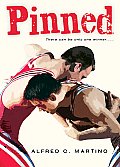
Pinned by Alfred C. Martino and
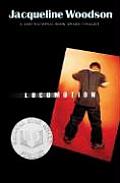
Locomotion by Jacqueline Woodson


In this gripping story, wrestling dominates the lives of two young men. Ivan Korske and Bobby Zane come from very different backgrounds--yet they both have the drive, determination, and commitment of a champion. And both are determined to have successful wrestling seasons despite having to grapple with their own demons.
But their personal problems won't matter when these two teens meet on the mat to compete for the title of New Jersey State Wrestling Champion. Both Ivan and Bobby have put in grueling hours of practice, endured intense hunger to cut weight, and sacrificed themselves for the sport they love--but only one of them is destined to win.


Each kindness makes the world a little better.
Chloe and her friends won't play with the new girl, Maya. Maya is different--she wears hand-me-downs and plays with old-fashioned toys. Every time Maya tries to join Chloe and her gang, they reject her. Eventually, Maya plays alone, and then stops coming to school altogether. When Chloe's teacher gives a lesson about how even small acts of kindness can change the world, Chloe is stung by the lost opportunity for friendship, and thinks about how much better it could have been if she'd shown a little kindness toward Maya.
This unforgettable book is written and illustrated by the award-winning team that created The Other Side and the Caldecott Honor winner Coming On Home Soon. With its powerful message and striking art, it will resonate with readers long after they've put it down.


Go here to get this week's downloads.

Note: these books don't expire like the e-audiobooks you get from the library. So, be sure to download the books even if you don't think you'll get around to listening to them right away.

More information about Sync is available in this post.

Wednesday, July 25, 2012

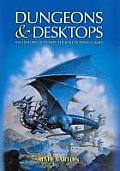
Dungeons & Desktops by Matt Barton

Dungeons and Desktops: The History of Computer Role-Playing Games
by Matt Barton


I haven't read Dungeons and Desktops, but it comes recommended by Russell, who has it checked out of our public library.  He's already foisted the book off on my gamer father.

As is painfully obvious from its subtitle, Dungeons and Desktops explores the history of the CPRG genre. Lest other gamers feel left out, the book does discuss console games and MMOs and how they are related to CPRGs.

Barton is an English professor by trade and Russell reports that Dungeons and Desktops is well-written, easy, engaging read. In addition to being informative, the book brought back lots of good memories of playing the games it discusses. He also appreciated that Barton fills out the story of the games, describing how the games were designed and who designed them.
Holy acronyms, Batman! (and lots more in the book)
CRPG: computer role-playing game.
MMO: massively multiplayer online [game].

Monday, July 23, 2012

quotable Ursula Le Guin

I've had this quote up on my sidebar for a little while now, but since I know many people (such as myself) click through from their blog readers only irregularly, I'm sharing it in its own post. It's too good not to share. From her February 2008 Harper's Magazine article, "Staying Awake: Notes on the alleged decline of reading" -
The book itself is a curious artifact, not showy in its technology but complex and extremely efficient: a really neat little device, compact, often very pleasant to look at and handle, that can last decades, even centuries. It doesn’t have to be plugged in, activated, or performed by a machine; all it needs is light, a human eye, and a human mind. It is not one of a kind, and it is not ephemeral. It lasts. It is reliable. If a book told you something when you were fifteen, it will tell it to you again when you’re fifty, though you may understand it so differently that it seems you’re reading a whole new book.
– Ursula Le Guin

Saturday, July 21, 2012

Sync this week: Cleopatra's Moon and Antony & Cleopatra

Sync's offerings this week (Thursday, July 19 through Wednesday, July 25, 2012) are:


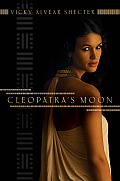
Cleopatra's Moon by Vicky Shecter
and
Shakespeare's Antony and Cleopatra


The Luxe meets the ancient world in the extraordinary story of Cleopatra's daughter.
Selene has grown up in a palace on the Nile with her parents, Cleopatra and Mark Antony--the most brilliant, powerful rulers on earth. But the jealous Roman Emperor Octavianus wants Egypt for himself, and when war finally comes, Selene faces the loss of all she's ever loved. Forced to build a new life in Octavianus's household in Rome, she finds herself torn between two young men and two possible destinies--until she reaches out to claim her own.
This stunning novel brings to life the personalities and passions of one of the greatest dramas in history, and offers a wonderful new heroine in Selene.


The twin empires of Egypt and Rome mingle and clash in this towering tragedy. Impulsiveness, passion, mistaken identity and dark humor all color the fascinating dalliance between Antony and Cleopatra, the larger-than-life pair at the center of this play.
A BBC Radio 3 full cast production.


Go here to get this week's downloads.

Note: these books don't expire like the e-audiobooks you get from the library. So, be sure to download the books even if you don't think you'll get around to listening to them right away.

More information about Sync is available in this post.

Thursday, July 19, 2012

steampunk style

Steampunk has gotten quite a bit of attention on the blog (see posts), but the focus has always been on the fiction. While steampunk is at heart a literary subgenre,1 for many it is first and foremost a design aesthetic. And one of the things steampunk aficionados like to do most is dress up to attend steampunk-themed events.

Items characteristic of steampunk fashion are under-bust corsets and goggles adorned with decorative metal elements. Individuals beginning to craft costumes are often admonished to begin with a items that are historically accurate to the period and then add shiny and creative details. Steampunk costumes often require a trips to both the local thrift and hardware stores before they are complete.

When I think of steampunk style, the word that often comes to mind is a made-up one, reproaesthetical. In Megan McCafferty's Bumped, reproaesthetical is a slang term meaning "having good genes" or "worthy of breeding with".  Obviously, that's not what I mean, but if one imagines the combination relying on historical reproduction (or the use of replicas) rather than sexual, my use of reproaesthetical likely begins to make more sense.

Steampunk style is a riff on historical style.  Historical reproductions (and authentic period items) can serve as a foundation, becoming steampunk with the addition of anachronistic decorative elements.  They can also inspire something completely new as illustrated by the images below (click on them for a bigger version of the images).
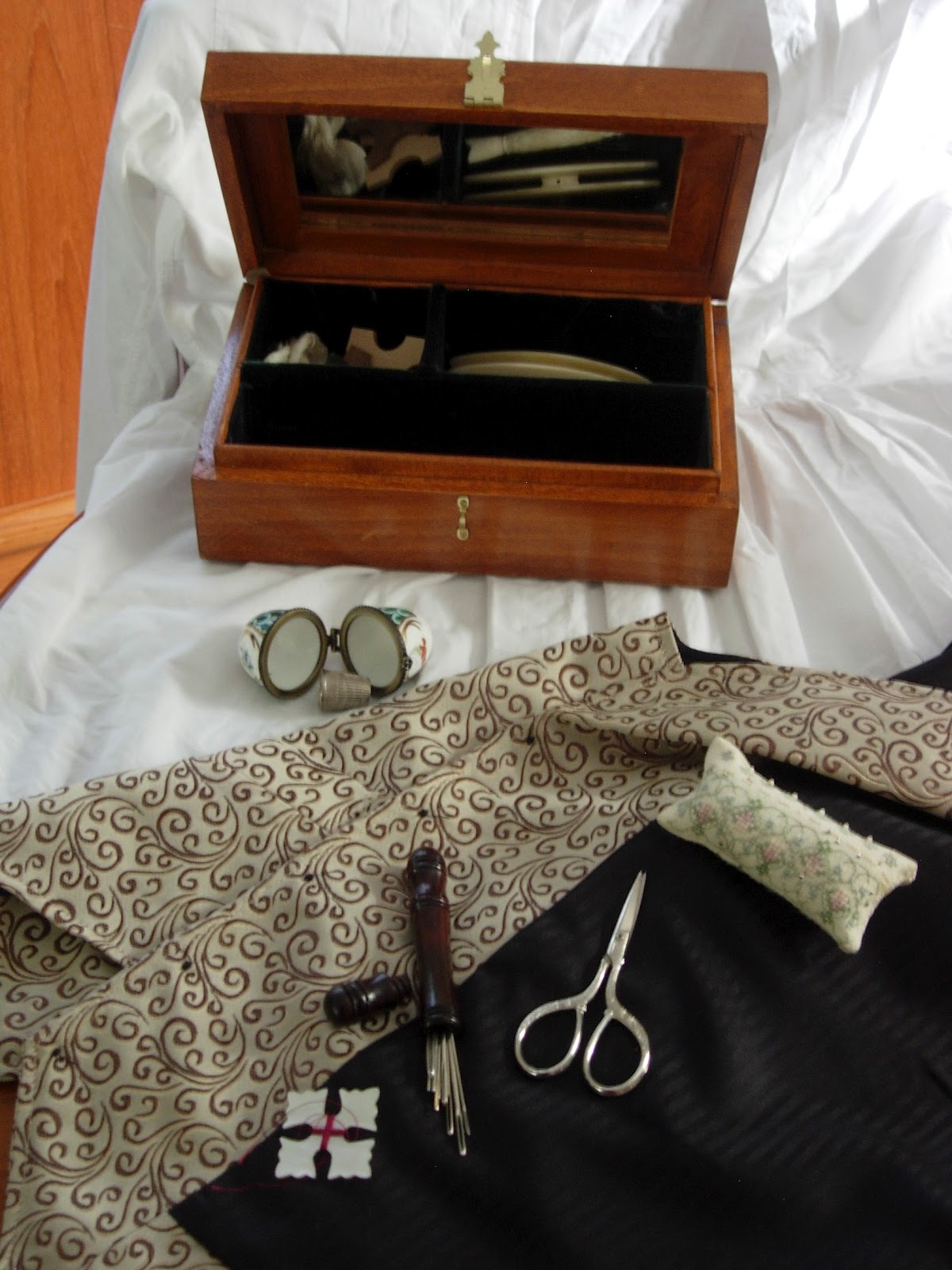
A friend's reproduction Victorian sewing box and tools

First, we have a portable 19th century sewing kit. Vintage implements (a delicately hand stitched pin cushion, threads both in the skeins and on thread winders, a silver-covered steel thimble in porcelain case, a pair of sharp metal scissors, and a variety of fancy needle cases made of bone and wood) are contained within a varnished wood case that is padded to protect its more fragile contents and set with a mirror that was used to reflect light onto stitchwork--an important feature in the perpetually dark, candle- or gas-lit world of the nineteenth-century.

Steampunk bracer constructed by R.H Mardigan Enterprises


The above is a streamlined steampunk version of the same tools. A workaday wooden needle case, brass thimble, miniature pincushion,2 fancy brass scissors, and wooden spools of thread are mounted on a leather wrist guard. This "Tailor’s Assistant" is a compact solution that utilizes the "latest" Victorian technology (wooden spools were first introduced in the 1840s) to make a forearm-mounted sewing kit both stylish and practical.
  1. Historical science fiction set often (though not exclusively) in Victorian London.
  2. The tomato-shaped pincushion dates to the Victorian era when tomatoes were placed on the mantle of a new home to guarantee prosperity. Tomato stand-ins (red-fabric stuffed with wool or sawdust) were needed when the fruit was out of season. While tomatoes would be discarded when they started to spoil, the fabric substitutes were retained and put to use for pin storage. (Why are pincushions frequently made to resemble tomatoes?)